Acoustic treatment vs soundproofing: what your theater needs
By Adam Zell, Boston Automations | Published | Updated | 7 minute read
The short answer
Is acoustic treatment the same as soundproofing?
No. Acoustic treatment controls how sound behaves inside the theater, using absorption and diffusion to clean up echo, tame bass and make dialogue clear. Soundproofing, or sound isolation, stops sound from passing through walls, floors and ceilings to the rest of the house. Isolation has to be built into the construction. Treatment is installed on the finished walls.
Two different problems
People often use the words acoustics and soundproofing as if they mean the same thing. They solve opposite problems. Acoustic treatment is about what you hear in your seat. Sound isolation, the proper name for soundproofing, is about what everyone else in the house hears. A theater can sound wonderful and still keep the whole house awake, or be perfectly quiet outside and sound harsh inside.
How acoustic treatment works
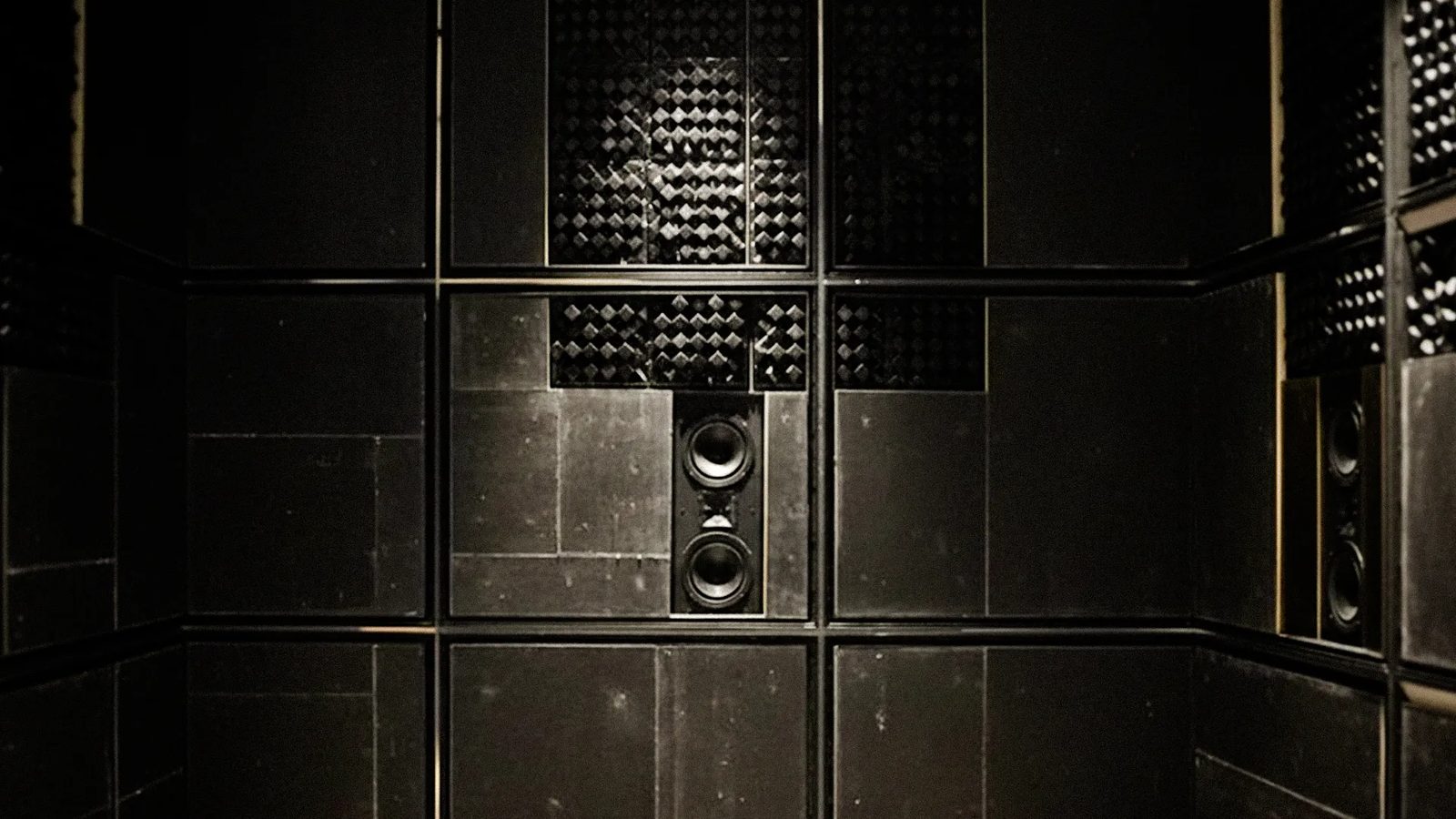
In an untreated room, sound bounces off hard walls, ceilings and floors and arrives at your ears a few milliseconds after the direct sound from the speaker. Those reflections smear dialogue, make the room sound boomy and blur where effects come from. Acoustic treatment controls them with three tools.
- Absorption turns sound energy into a tiny amount of heat. It tames early reflections and reduces echo and harshness.
- Diffusion scatters sound evenly so the room keeps a sense of space instead of sounding dead.
- Bass control manages low frequencies, which build up in corners and create peaks and nulls between seats. Thicker absorption, careful subwoofer placement and room correction all play a part.
The right mix depends on the room's size, shape, finishes and seating. Treatment is designed from a model of the room, not picked from a catalog, and it is installed on the finished walls and ceiling.
How sound isolation works
Isolation keeps sound from traveling through the structure. Sound moves through walls in two ways: through the air and through the framing. Good isolation tackles both with four principles.
- Mass: heavier walls and ceilings are harder to move. Two layers of 5/8 inch drywall are common.
- Damping: a viscoelastic compound between drywall layers turns vibration into heat.
- Decoupling: isolation clips and hat channel, or staggered or double stud walls, keep the inner surface from touching the framing.
- Sealing: sound leaks through any gap. Outlets, lights, ducts and doors all need attention, and the door should be solid core with full seals.
Isolation is built into the construction, before drywall. That is why it belongs in the drawings, and why the CinemaTech drawing sets we deliver call out the wall and ceiling isolation assemblies for the builder.
Side by side
| Consideration | Acoustic treatment | Sound isolation |
|---|---|---|
| Goal | Better sound inside the room | Less sound outside the room |
| Tools | Absorption, diffusion, bass control | Mass, damping, decoupling, sealing |
| When installed | After drywall and paint | During framing and drywall |
| Who builds it | CinemaTech's certified installers | Your builder, from our drawings |
| Can it be added later? | Yes | Only partly, without opening walls |
Do you need both?
Every dedicated theater needs acoustic treatment. Even the best speakers sound wrong in an untreated room. Whether you need isolation depends on what is around the theater. If it sits under bedrooms, next to a home office, in a condo or in a home where people watch late at night, isolation is worth planning. A lower level theater under the garage or a detached building may need much less.
A media room open to the rest of the house is different. It cannot be isolated, so treatment aims for clarity at moderate volume. See our home theater versus media room guide for how that changes the design.
How much isolation is enough?
Isolation is measured in decibels of reduction, and every step up costs more in materials and floor space. A standard interior wall with one layer of drywall on each side lets ordinary conversation through. Adding mass, damping and decoupling can reduce a loud film to a faint murmur next door. Getting to near silence at full reference level, with deep bass, takes the most complete assemblies on walls, ceiling and sometimes the floor.
The right level depends on who is nearby and when you watch. A theater under a nursery needs more than one under a garage. We talk through how loud you like to listen, what rooms surround the theater and what you want those rooms to hear, then specify assemblies to match. Bass is the hardest frequency to stop, so subwoofer choice and placement are part of the same conversation.
Do not forget the paths around the walls. Sound travels through shared ductwork, through framing that runs continuously from the theater into the next room and through a floor that ties into the rest of the structure. Planning HVAC with lined, indirect duct runs and stopping framing connections at the theater boundary often matters as much as the walls themselves.
Treatment in media rooms
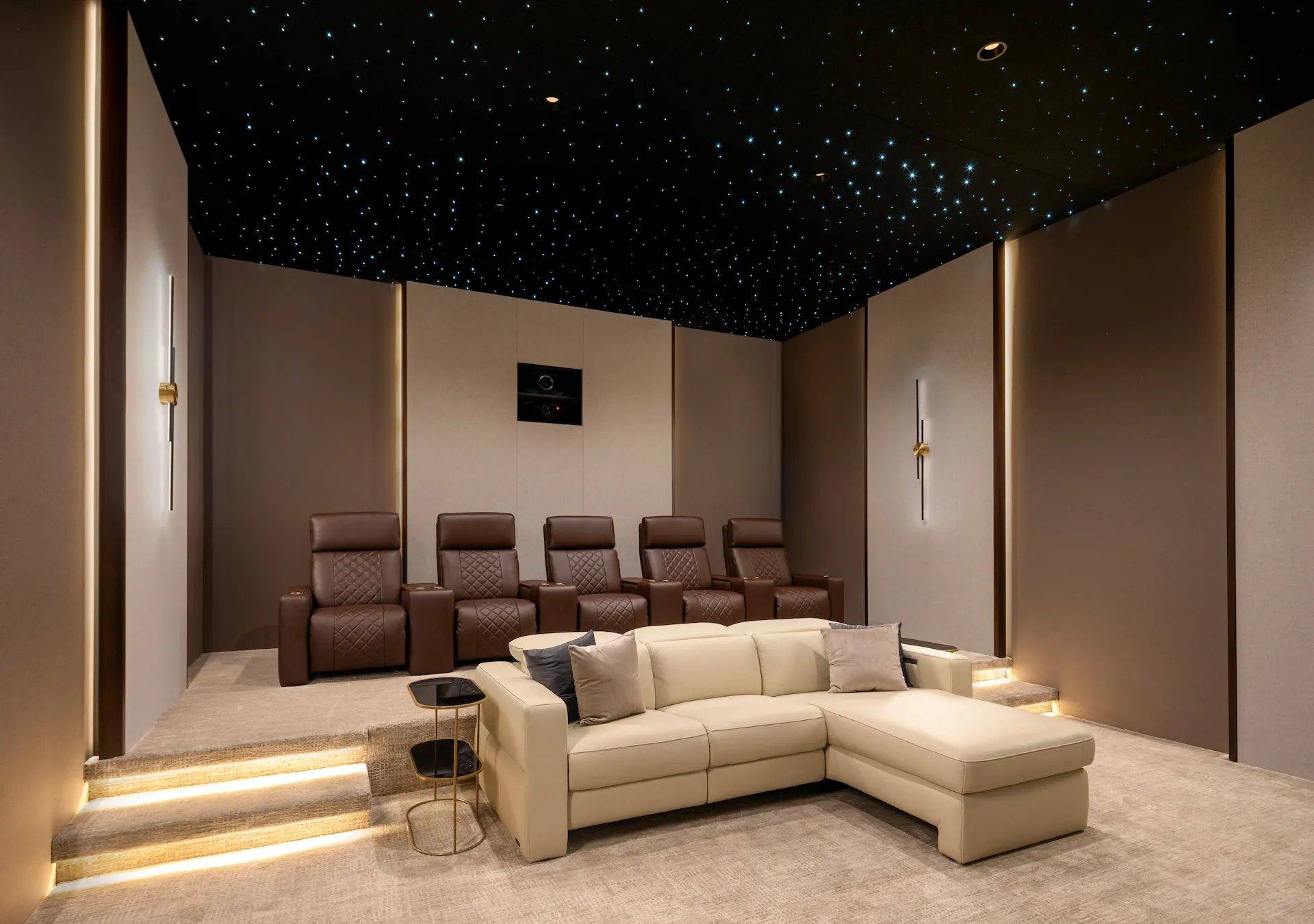
Media rooms still benefit from treatment, just in a quieter form. Fabric wrapped panels can sit behind art or between millwork, heavy rugs and upholstered seating absorb reflections, and bookshelves act as natural diffusers. The goal is clear dialogue and controlled bass without the room looking like a studio. CinemaTech's system works here too, and it has been installed in media rooms and living rooms as well as dedicated theaters.
Common mistakes
- Covering every wall in foam, which kills the treble but leaves the bass booming.
- Building isolated walls and then cutting dozens of unsealed holes for lights and outlets.
- Forgetting the HVAC, which carries sound through ducts unless the runs are lined and baffled.
- Using a hollow door with a gap underneath, which undoes the walls around it.
- Treating the room before the seating layout is final, so the panels miss the reflection points.
The CinemaTech Acoustic Room System
For treatment, we use CinemaTech's Acoustic Room System, or ARS. It combines absorption panels that perform down to about 100 Hz at 1.25 inches thick with CinemaTech's patented diffusers, held in a 1.25 inch fabric retainer framework and hidden behind acoustically transparent fabric. The result is a fully treated room with crisp, tailored walls in the color of your choosing. Learn how it is installed on the acoustics page, and how speaker layout fits in on our Dolby Atmos guide.
More questions
Will acoustic panels stop sound from reaching the rest of the house?
No. Acoustic panels absorb reflections inside the room, which makes the theater sound better, but they add very little mass and do almost nothing to stop sound passing through walls. Keeping sound in the room takes isolation built into the construction.
Can soundproofing be added to an existing room?
Partly. Adding a second layer of drywall with damping compound, sealing gaps and fitting a solid core door with seals all help. Full isolation with decoupled framing usually means opening walls and ceilings, so it is easiest during a renovation or new build.
Does acoustic fabric affect the look of the room?
It shapes it. Acoustically transparent fabric stretched over the treatment gives clean, tailored walls in almost any color, with lighting, trim and millwork designed around it. The panels and diffusers behind it are never seen.