Home theater or media room: which should you build?
By Adam Zell, Boston Automations | Published | Updated | 7 minute read
The short answer
What is the difference between a home theater and a media room?
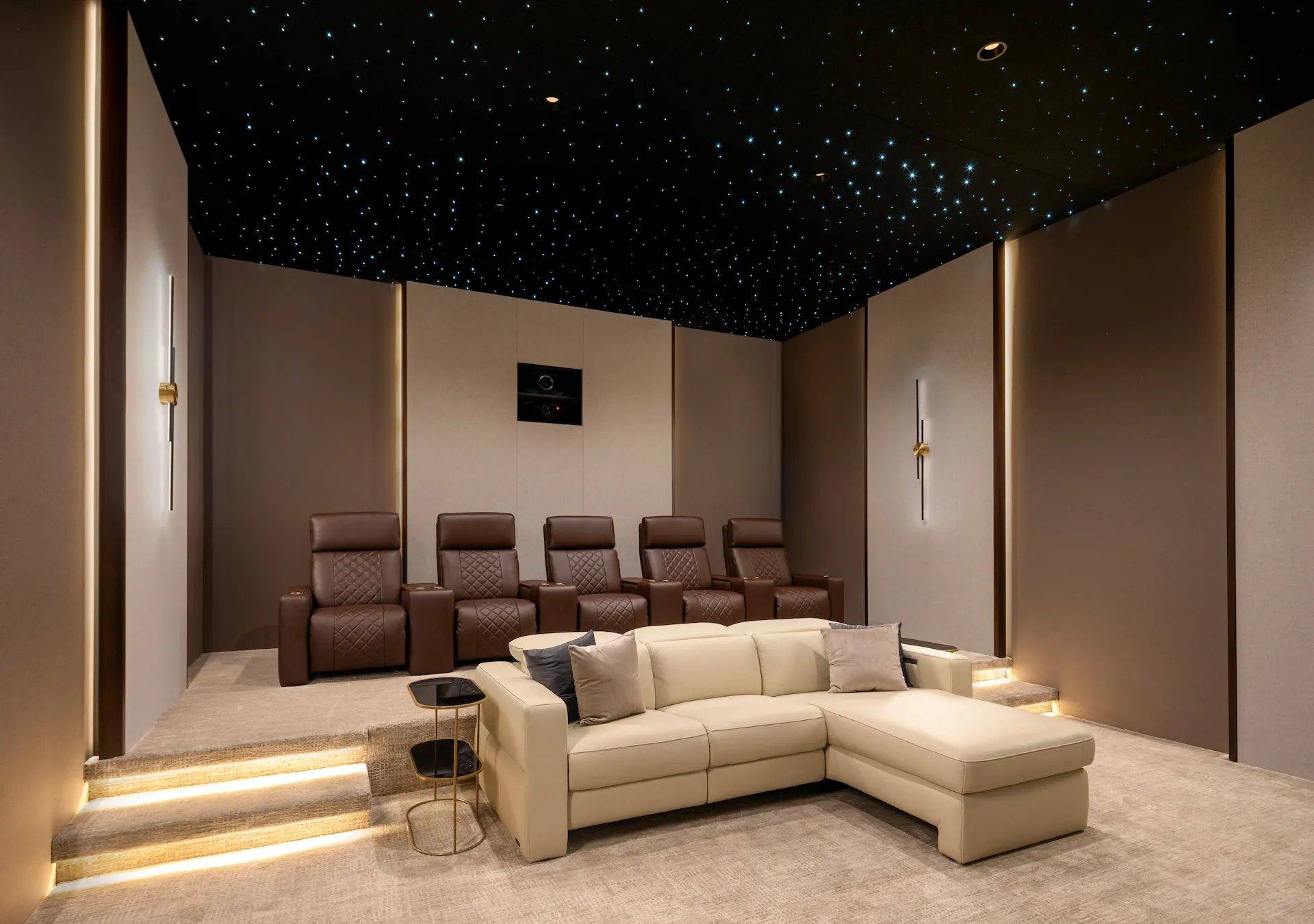
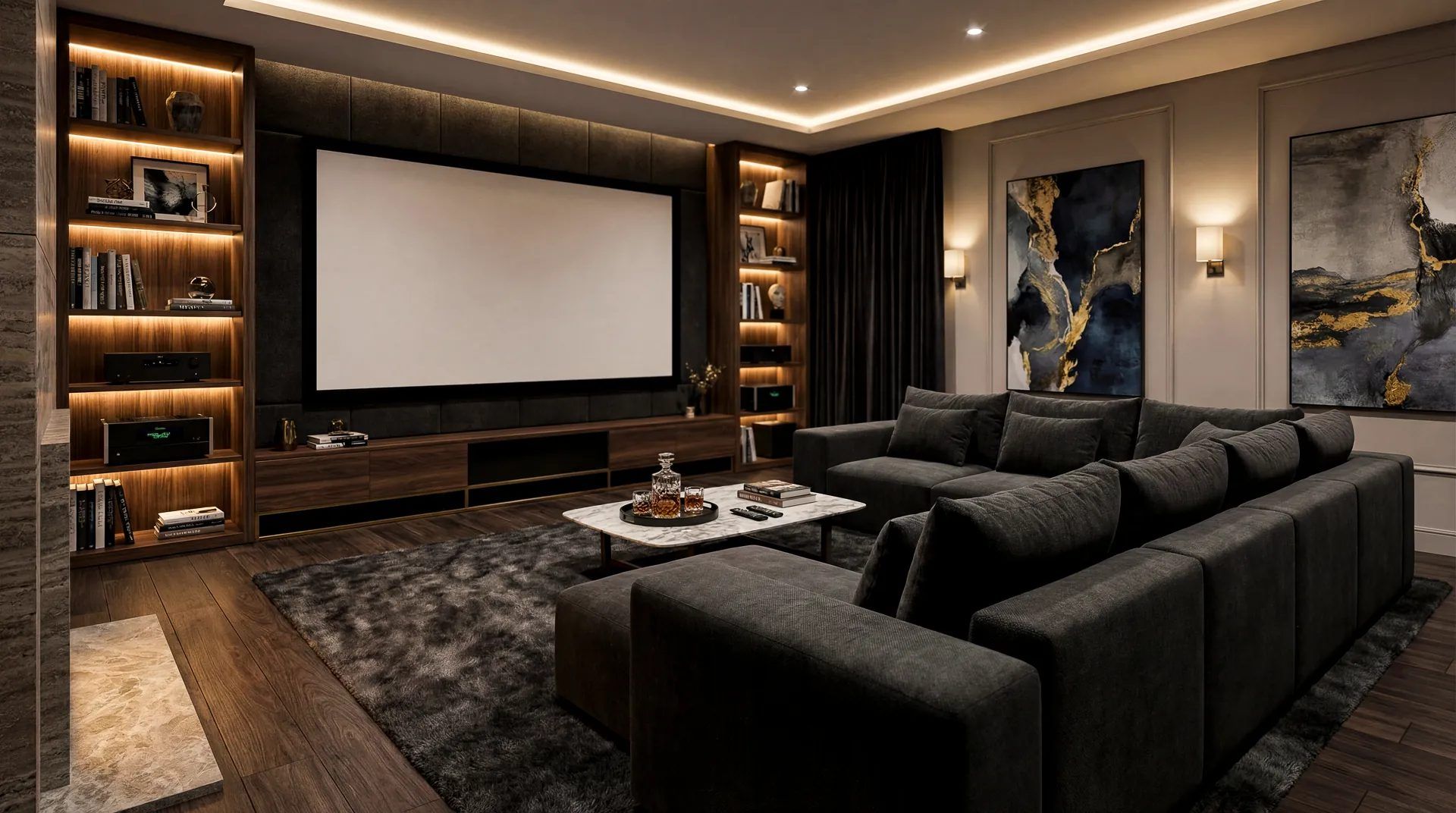
A dedicated home theater is a closed room built for one job: no windows, controlled light, acoustic treatment, tiered seating and a projector and screen sized for immersion. A media room is a living space that also works as a theater, usually with a large display or a drop-down screen, comfortable sofas and shades. Theaters give the best picture and sound. Media rooms get used every day.
What each room is
A dedicated home theater, or private cinema, is a room designed for one purpose: watching. It has no windows or has full blackout, dark finishes that do not reflect light back onto the screen, acoustic treatment on the walls and ceiling, and seating on tiers so every row has a clear view. The projector, screen and speakers are sized for the room rather than for the furniture.
A media room is a living space that turns into a theater. It might be a family room, a lower level lounge or a room over the garage. It keeps windows, daylight and conversation, and uses a large display or a drop-down screen, in-wall speakers and comfortable sofas. It is the room people use every day.
Side by side
| Consideration | Dedicated theater | Media room |
|---|---|---|
| Light | Fully controlled, dark finishes | Windows and daylight, controlled with shades |
| Picture | 4K laser projector, 120 to 200 inch screen | 85 to 115 inch display, or projector with an ambient light rejecting screen |
| Sound | 7.2.4 to 9.4.6 Dolby Atmos behind an acoustically transparent screen | 5.1.2 to 7.2.4 Atmos with in-wall and in-ceiling speakers |
| Acoustics | Designed treatment on every surface, often with isolation | Rugs, upholstery and discreet panels |
| Seating | Recliners or sofas on tiers | Sectionals and lounge seating on one level |
| Everyday use | Films, games and events | Everything, every day |
| Planning budget | $150,000 to $400,000 and up | $60,000 to $150,000 |
Picture and light
Light is the biggest difference. A projected image is light reflected off a screen, so any other light in the room washes it out. In a dark theater with dark walls and ceiling, a good laser projector shows deep blacks and rich color on a screen two or three times the size of the largest television.
In a media room with windows, you either control the light with motorized shades or choose a display that is bright enough to overpower it. Large televisions, direct-view LED walls and ambient light rejecting screens all solve this in different ways. Our projector versus TV guide walks through the options.
Sound and neighbors
A theater can play at reference level because it is designed to contain the sound. Acoustic treatment controls echo and bass inside the room, and isolation keeps the subwoofers from shaking the kitchen above. A media room is usually open to the rest of the house, so it is tuned for clarity at more moderate volumes, with speakers hidden in walls and ceilings.
If late night films are a priority, or the room sits under bedrooms, plan isolation from the start. Read more in acoustics versus soundproofing.
Seating and layout
Dedicated theaters are planned around sightlines. Rows step up on risers so heads do not block the screen, and seats are spaced for the recline. CinemaTech recliners such as the Valentino, or sofas such as Sophia and Hudson, are typical here.
Media rooms favor one level of deep, modular seating that works for conversation as well as viewing. CinemaTech's Greenwich and Montclair sofas, and the motorized CinemaTech Living collection, were designed for exactly this kind of room.
Cost
A dedicated private cinema costs more because more of the room is built for the experience: construction for isolation and risers, acoustic walls, a projector and screen, more speakers and more seats. As a planning guide, luxury media rooms in New England typically run $60,000 to $150,000 installed and dedicated cinemas $150,000 to $400,000, with reference rooms above that. See the full home theater cost guide.
When to build both
Many of the homes we work in have both: a media room near the kitchen for everyday viewing and games, and a private cinema on the lower level for films and gatherings. If you are building new, planning both together lets them share equipment space, wiring and control, so the whole house runs from one app.
More questions
Can a media room have a projector?
Yes. Many media rooms use a projector hidden in a soffit or cabinet with a motorized drop-down screen, paired with blackout shades. In rooms that stay bright, an ambient light rejecting screen or a large display is the better choice.
Does a home theater need to be windowless?
For the best picture, yes, or the windows need full blackout shades. Any stray light lifts the black level of a projected image and reduces contrast, which is why dedicated cinemas are usually interior rooms or lower levels.
Which adds more to a home, a theater or a media room?
It depends on the buyer, and we do not promise resale value. A media room is useful to almost anyone. A dedicated cinema is a stronger draw for buyers who love film and entertaining, and it is a feature people remember from a showing.