What a luxury home theater really costs
The short answer
How much does a luxury home theater cost?
In New England, a luxury media room typically costs $60,000 to $150,000 installed, a dedicated private cinema $150,000 to $400,000, and a reference cinema $400,000 and up. These ranges cover design, CinemaTech seating, acoustics, picture, sound, lighting, control and calibration. Construction by your builder is separate.
Planning ranges by room type
| Room | Installed range | Seats | Typical scope |
|---|---|---|---|
| Luxury media room | $60,000 to $150,000 | 4 to 8 | A living space that becomes a theater: a large display or a projector and drop-down screen, a 5.1.2 to 7.2.4 Dolby Atmos system with in-wall speakers, motorized CinemaTech sofas or CinemaTech Living seating, lighting scenes and one-touch control. |
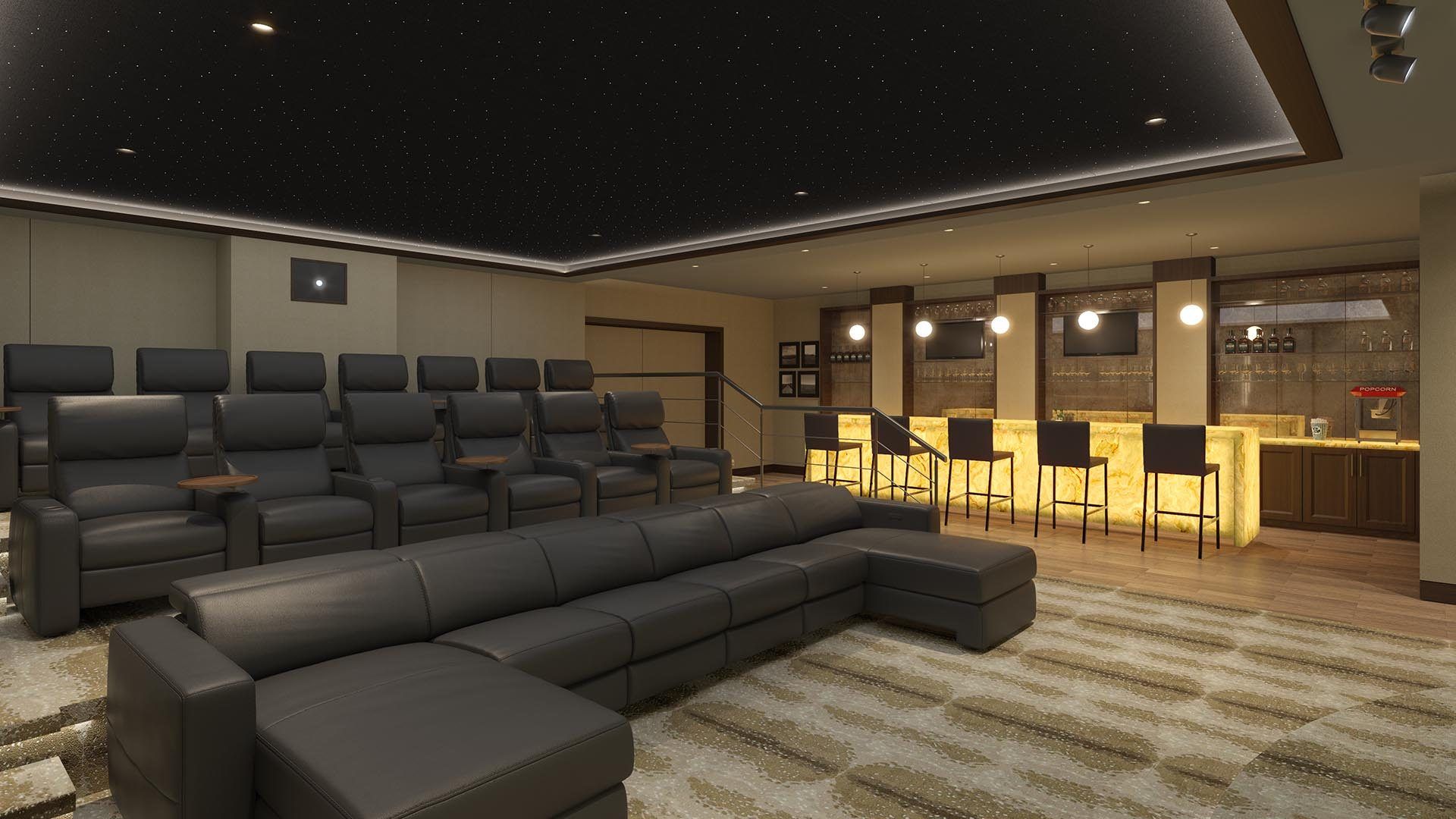
| Dedicated private cinema | $150,000 to $400,000 | 6 to 12 | A purpose-built room with two or more tiers, a 4K laser projector and acoustically transparent screen, a 7.2.4 to 9.4.6 Atmos system, the CinemaTech Acoustic Room System, CinemaTech recliners, architectural lighting and a starfield or feature ceiling. |
| Reference cinema | $400,000 and up | 8 to 20 | A room engineered to reference standards: decoupled walls and ceiling for sound isolation, a high-channel-count immersive system with multiple subwoofers, a premium projector and screen, full custom millwork, a lounge or bar, and complete design documentation. |
Where the money goes
| Budget line | What drives it |
|---|---|
| Design Services Program, drawings and renderings | Quoted once we understand the room. Starts the project and shapes every number below it. |
| CinemaTech seating | Priced per seat or module by model, size, motors and upholstery. Leather and custom materials add cost. |
| Acoustic Room System and fabric walls | Priced by wall area and the acoustic model for the room. |
| Projector, screen or display | The single largest technology line in most dedicated theaters. |
| Speakers, amplification and processing | Scales with channel count, subwoofers and room size. |
| Lighting, starfield ceiling and control | Scene lighting, step lights, sconces, motorized shades and one-touch control. |
| Construction by your builder | Framing, isolation, risers, HVAC, electrical and finishes. Priced by the builder from our drawings. |
What moves the number
- Seat count and rows. Every additional row adds seats, a riser, more speakers and often a larger room.
- Isolation. Rooms under bedrooms or in condos need decoupled construction, which is mostly builder cost.
- Picture. Screen size and brightness drive projector choice, the single largest technology line.
- Sound. Moving from 7.2.4 to 9.4.6 adds speakers, subwoofers, amplification and processing.
- Materials. Leather, custom fabric, millwork and a starfield ceiling all add to the finish budget.
Spending wisely
The best value decisions happen on paper. A riser that is four inches too short or a beam in the wrong place costs far more to fix after drywall than to solve in the drawings, which is why every project starts with the Design Services Program. It produces an itemized proposal, so you can see exactly where each dollar goes before you commit.
For room size and its effect on cost, see the room size guide. For the difference between room types, read home theater vs media room.
Cost questions
What drives the cost of a home theater the most?
Room size and seat count, the projector and screen, the number of speakers and subwoofers, the level of acoustic treatment and isolation, and the finishes. Construction scope by your builder, especially isolation, can be as significant as the technology.
Does the cost include construction?
Our planning ranges cover design, seating, acoustics, technology, installation and calibration. Framing, isolation, risers, drywall, HVAC and electrical are priced by your builder from the drawings.
How can I control the budget without losing the experience?
Spend on the things you cannot change later: room dimensions, isolation, riser heights and wiring. Seating can be phased, and some technology can be upgraded over time if pathways and power are planned now.
Is a media room cheaper than a dedicated theater?
Usually, because it needs less construction, fewer seats and simpler acoustics. A media room with high-end display and sound can still reach the lower end of the private cinema range.
Keep exploring
A conversation about your theater
Tell us about the room, the way your family watches, and the feeling you want when the lights go down. We will bring CinemaTech's design team, our engineers and a plan.
Or call us at (781) 333-8003