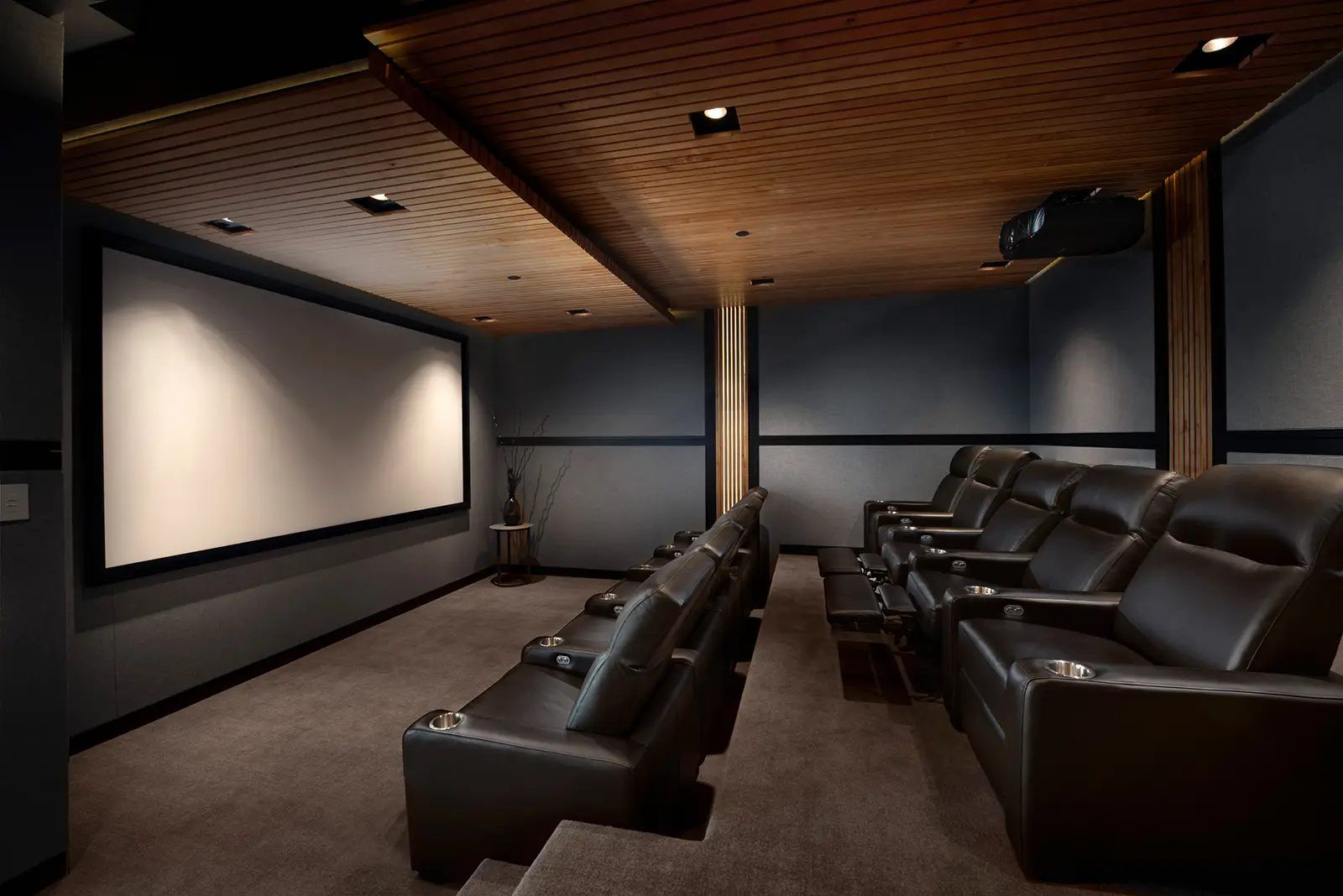
Constant image height: designing a cinema around a scope screen
By Adam Zell, Boston Automations | Published | Updated | 7 minute read
The short answer
What is constant image height?
Constant image height, or CIH, is a screen layout where every film shares the same image height and wider films simply get wider, as in a commercial cinema. It uses a wide 2.35 or 2.40 screen, a projector that zooms or an anamorphic lens, and ideally motorized masking. Aspect ratio cues from Kaleidescape or a madVR Envy can switch formats automatically.
Films come in different shapes
Television is 16:9, about 1.78 to 1. Feature films are often wider. The most common shapes are:
| Aspect ratio | Where you see it |
|---|---|
| 1.33:1 | Classic films and older television |
| 1.78:1 (16:9) | Television, streaming series, sports |
| 1.85:1 | Many dramas, comedies and animated films |
| 2.39:1 (scope) | Most large scale feature films |
On a 16:9 screen, a 2.39 film shows black bars above and below. The film is the smallest image on the screen, even though it is often the most cinematic thing you watch.
What constant image height means
Constant image height, or CIH, turns that around. The screen is wide, typically 2.35 or 2.40 to 1, and every format shares the same height. Scope films fill the whole screen. A 16:9 image sits in the center at full height with the sides unused. Wider films simply get wider, exactly as in a commercial cinema.
The effect is that films feel bigger than television, which is how most people expect a cinema to work. It also suits the proportions of many rooms, where width is easier to find than height.
Zoom or anamorphic lens
There are two ways to fill a scope screen with a projector.
- Zoom method. The projector stores lens memories. For scope films it zooms out so the image fills the screen width, with the unused black bars falling above and below the screen. For 16:9 it zooms in. This is simple and needs no extra optics, but the black bars use part of the projector's panel and light.
- Anamorphic lens. A lens in front of the projector stretches the image horizontally, while a processor vertically scales the film to use the full panel. No light or resolution is spent on black bars. It costs more, needs careful alignment and benefits from geometry correction, which the madVR Envy Extreme MK3 provides.
Both can look superb. The choice depends on the projector, the screen size and how much light is available.
Masking
Masking means black, light absorbing panels or curtains that frame the image. Without it, the unused parts of the screen glow faintly, especially the gray bars from the zoom method spilling onto the wall or screen. With motorized masking, side panels close in for 16:9 and 1.85 films and open fully for scope, so every image has a crisp black border.
Masking is optional in CIH, but in a dedicated cinema it is often the finishing touch that makes the picture look sharper and higher in contrast.
Constant image width and other approaches
CIH is not the only option. With constant image width, the screen is 16:9 and every format fills its width, so scope films appear shorter, with top and bottom masking hiding the unused area. It suits rooms that are used mostly for television and sports. Constant image area is a compromise, sizing each format so it covers roughly the same area, with masking on all four sides. Each approach changes the screen, the masking and the speaker layout, which is why we settle it in the first design meeting rather than at the end.
Automatic switching
Nobody wants to adjust lens memory and masking by hand every night. Two sources of information make it automatic:
- Kaleidescape. Kaleidescape has measured the true aspect ratio of the films in its store and provides that information to automation systems for its downloads. When you start a film, the control system can move the masking and recall the correct lens memory before the first frame.
- madVR Envy. The Envy handles aspect ratios and can detect changes in the picture itself, which covers sources that carry no aspect ratio information, such as streaming apps.
We program the control system so these cues drive the projector, masking and lighting together. See what Kaleidescape is and what a madVR Envy does.
Films that change shape
Some recent films change aspect ratio during the story, often opening up to a taller frame for sequences shot with large format cameras. A film may be listed as one ratio while long sections play in another. Top Gun: Maverick is a well known example. On a scope screen, the taller sections have to be handled somehow: cropped to fill the width, or shown smaller to preserve the full frame.
There is no single right answer, and preferences vary. We set up presets so you can choose, and the processor and control system apply the choice consistently.
Choosing the image size
In a CIH room, the scope image should feel immersive from the main row, and the 16:9 image should still feel generous. A common approach is to size the screen height for comfortable 16:9 viewing, then let scope films extend to the full width. That keeps sports and series large while films feel larger still.
The arithmetic is simple. Height equals width divided by the aspect ratio. A 2.40 screen 12 feet wide is 5 feet tall. A 16:9 image at that same 5 foot height is about 8.9 feet wide, so it sits in the center with roughly 18 inches unused on each side. Running these numbers for each format early shows whether the 16:9 image will feel big enough from the main row.
Screen width is limited by the room and by the speakers. With an acoustically transparent screen, the left and right speakers sit behind the image, ideally near its edges, so the width of the screen and the layout of the front speakers are designed together.
Planning the room
CIH affects the whole design. Screen width sets the speaker positions behind an acoustically transparent screen. The projector throw and lens choice set where the projector sits. Seating distance should be checked against both the scope image and the smaller 16:9 image so both feel right from the main row. Our room size guide covers distances, and the projector or TV guide covers screens and placement.
More questions
Is a scope screen a good idea if we watch a lot of TV?
It can be. Television and most series are 16:9, which shows as a centered image with the sides masked off. If most viewing is TV and sports, we often size the screen so the 16:9 image is still large, or choose a 16:9 screen with top and bottom masking instead.
What screen ratio should we choose, 2.35 or 2.40?
Most scope films today are 2.39:1, and screens are sold as 2.35 or 2.40. The difference is small. We choose based on the projector, the lens approach and the room width, and use masking to frame the image cleanly.
