Kaleidescape vs streaming: where the difference shows
By Adam Zell, Boston Automations | Published | Updated | 7 minute read
The short answer
Is Kaleidescape really better than streaming?
Yes, and the gap grows with screen size and speaker quality. Streaming services compress 4K heavily and lower quality when the network is busy, and usually carry Atmos in lossy Dolby Digital Plus. Kaleidescape downloads films at much higher bitrates, plays them from local storage and delivers lossless soundtracks bit for bit with the studio master.
What a 4K label does not tell you
A streaming app and a Kaleidescape player can both show a film labeled 4K, HDR and Dolby Atmos. Those labels describe the format, not the quality of the file. Two versions of the same film can share every label and still look and sound quite different, because of how much information each one carries.
On a television across a living room, the gap is easy to miss. On a large projection screen with a reference sound system, it becomes part of the experience. This guide explains where the differences come from.
Video compression and bitrate
All digital video is compressed. The question is how much. Bitrate, the amount of data used each second, is a useful shorthand: more data generally means fewer compromises in the picture.
Streaming services have to deliver 4K to millions of homes over ordinary connections at the same time, so they compress hard. They also use adaptive bitrate, which means the stream drops to a lower quality version whenever the network slows, then climbs back. You may never see the switch, but the first minutes of a film or a busy evening on the network often look softer.
The compromises show in the hardest material for an encoder to handle:
- Gradients such as skies, fog and smoke, which can break into visible bands.
- Dark scenes, where shadow detail turns into blocks or crawling noise.
- Film grain, which compression tends to smear or freeze.
- Fast motion with fine detail, such as rain, crowds or foliage.
Kaleidescape downloads the whole film before you watch it, so it does not need to fit a live connection. Files come from the studios' masters at much higher bitrates, and they play from a drive in your home at the same quality every time.
Color detail and 4K Cinematic
Consumer video, whether streamed or on disc, normally stores color at a lower resolution than brightness. This is called chroma subsampling, and the usual form, 4:2:0, keeps one color sample for every four pixels. Our eyes are less sensitive to color detail than to brightness, so it works, but fine colored edges and saturated detail lose some precision.
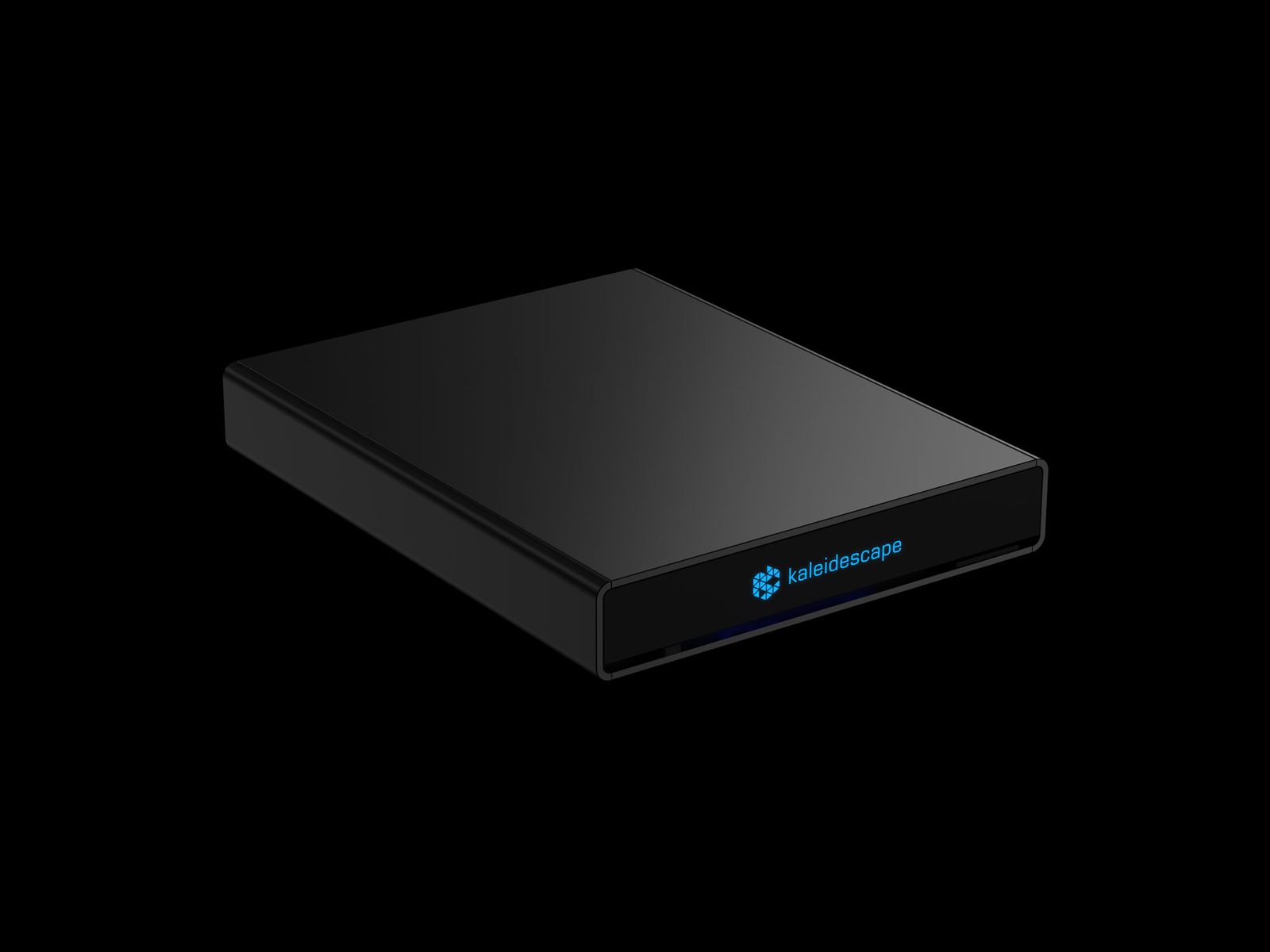
Kaleidescape's 4K Cinematic format, introduced with the Strato K in 2026, keeps full chroma resolution up to 4:4:4 and uses much higher bitrates than standard 4K. Reviewers have described it as the first consumer format of its kind. You need the Strato K to play it, and a projector and processor good enough to resolve it.
Lossy and lossless audio
This is often the larger difference. Streaming services generally carry Dolby Atmos inside Dolby Digital Plus, a lossy format that discards information to save bandwidth. Kaleidescape delivers soundtracks bit for bit with the studio master, in lossless formats up to Dolby Atmos and DTS:X, the same formats used on Ultra HD Blu-ray.
| Soundtrack | Typical streaming | Kaleidescape |
|---|---|---|
| Dolby Atmos | Inside Dolby Digital Plus (lossy) | Inside Dolby TrueHD (lossless) |
| DTS:X | Rarely offered | Lossless, where the studio provides it |
| Copy of the studio master | Re-encoded for streaming | Bit for bit |
In a room with large front speakers, several subwoofers and treated walls, lossless audio is easy to hear. Bass has more weight and definition, effects have more space around them, and dialogue stays clear in dense scenes. See our Dolby Atmos layout guide for the systems that reveal it.
What about Ultra HD Blu-ray?
Ultra HD Blu-ray is the other high quality option, and for many years it was the benchmark. The Blu-ray Disc Association quotes video rates of up to 128 megabits per second on a 100 GB disc, far above typical streaming, and discs carry the same lossless Atmos and DTS:X soundtracks Kaleidescape delivers. A good disc on a good player can look and sound excellent.
The differences are practical. Discs need a player in the rack or near the screen, someone to load them, shelf space and care. Many start with menus, trailers and warnings. Players also vary in how well they handle HDR. Kaleidescape keeps comparable or better quality while removing those steps, and it adds aspect ratio and lighting cues that a disc player does not send to the control system. If you have a cherished disc collection, we can still plan a player into the rack for it.
Consistency from night to night
A streamed film can look different on a Tuesday afternoon and on a Saturday night, depending on the network, the service and the app version. A Kaleidescape film looks the same every time because it is the same file on the same drive. For a calibrated cinema, that consistency matters. The settings we choose during calibration are tuned for a known, stable source.
There is also the experience itself. No app loading, no autoplaying previews and no update screen before the film. You choose a title and it starts. If the internet goes out during a storm, everything you have downloaded still plays.
Where you will notice it
- Large projection screens. Compression artifacts scale with the image. What hides on a TV is obvious at 150 inches.
- Reference sound systems. Lossless audio is audible on speakers and subwoofers designed for it.
- Dark, atmospheric films. Shadow detail is where streaming struggles most.
- Films with heavy grain. Grain survives intact at higher bitrates.
In a bright family room with a TV and a soundbar, the difference is still there, but it is smaller.
Living with both
For a dedicated cinema, we recommend a streaming device alongside Kaleidescape. Streaming covers live sports, series and the services the family already uses. Kaleidescape covers the films that deserve the room. The control system makes switching between them a single button. Learn more in what Kaleidescape is, or browse the Kaleidescape and madVR page.
More questions
Is Kaleidescape better than Ultra HD Blu-ray?
Kaleidescape delivers the same lossless audio formats as Ultra HD Blu-ray, and its 4K Cinematic format on the Strato K goes further with full chroma resolution and higher bitrates. It also removes discs, menus and trailers from the experience.
Will faster internet make streaming as good as Kaleidescape?
Faster internet reduces the chance of a stream dropping in quality, but it does not change how the service encodes the film in the first place. The compression and lossy audio are decided by the service, not your connection.
