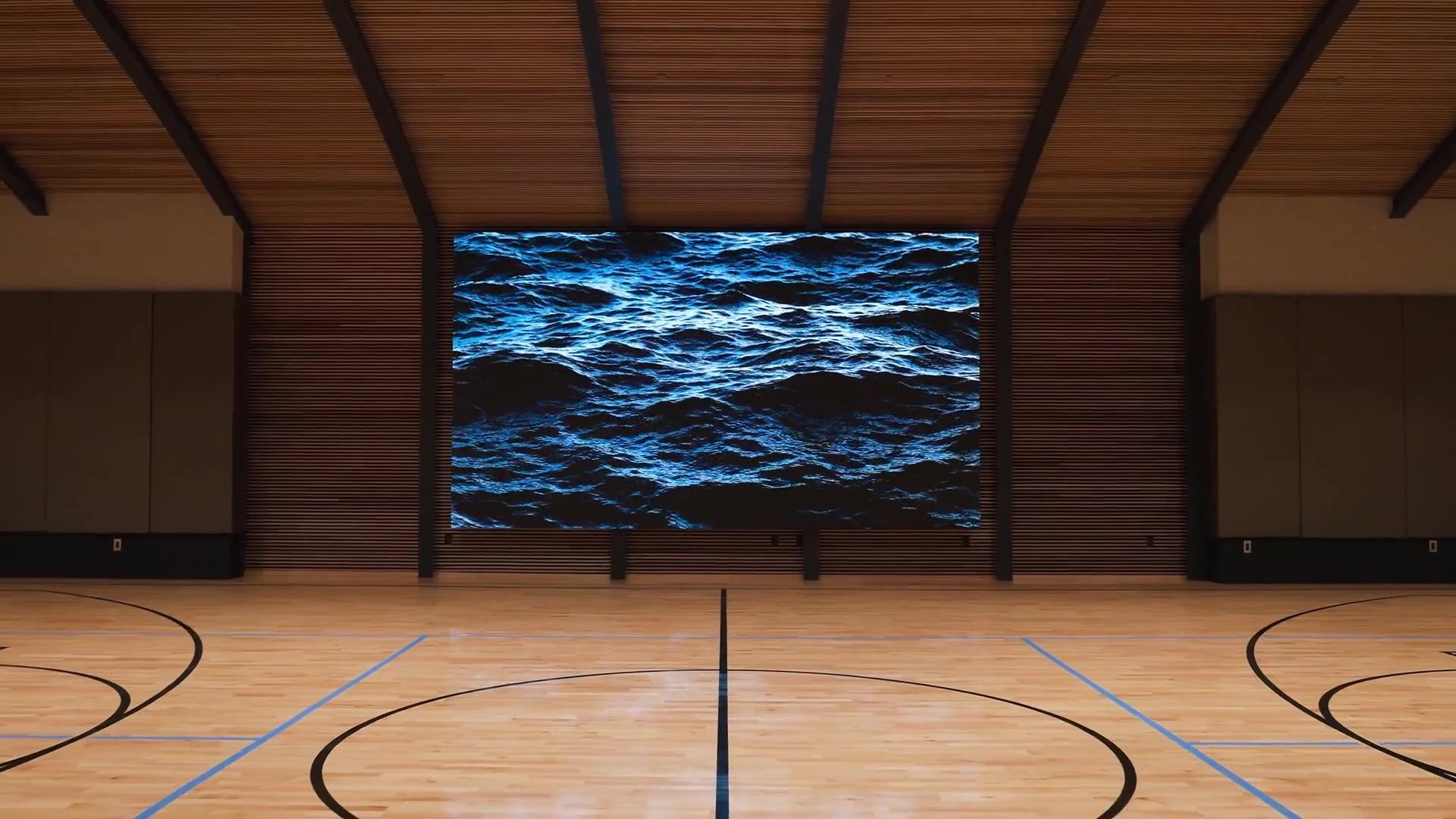
A picture the size of a wall, bright enough for daylight
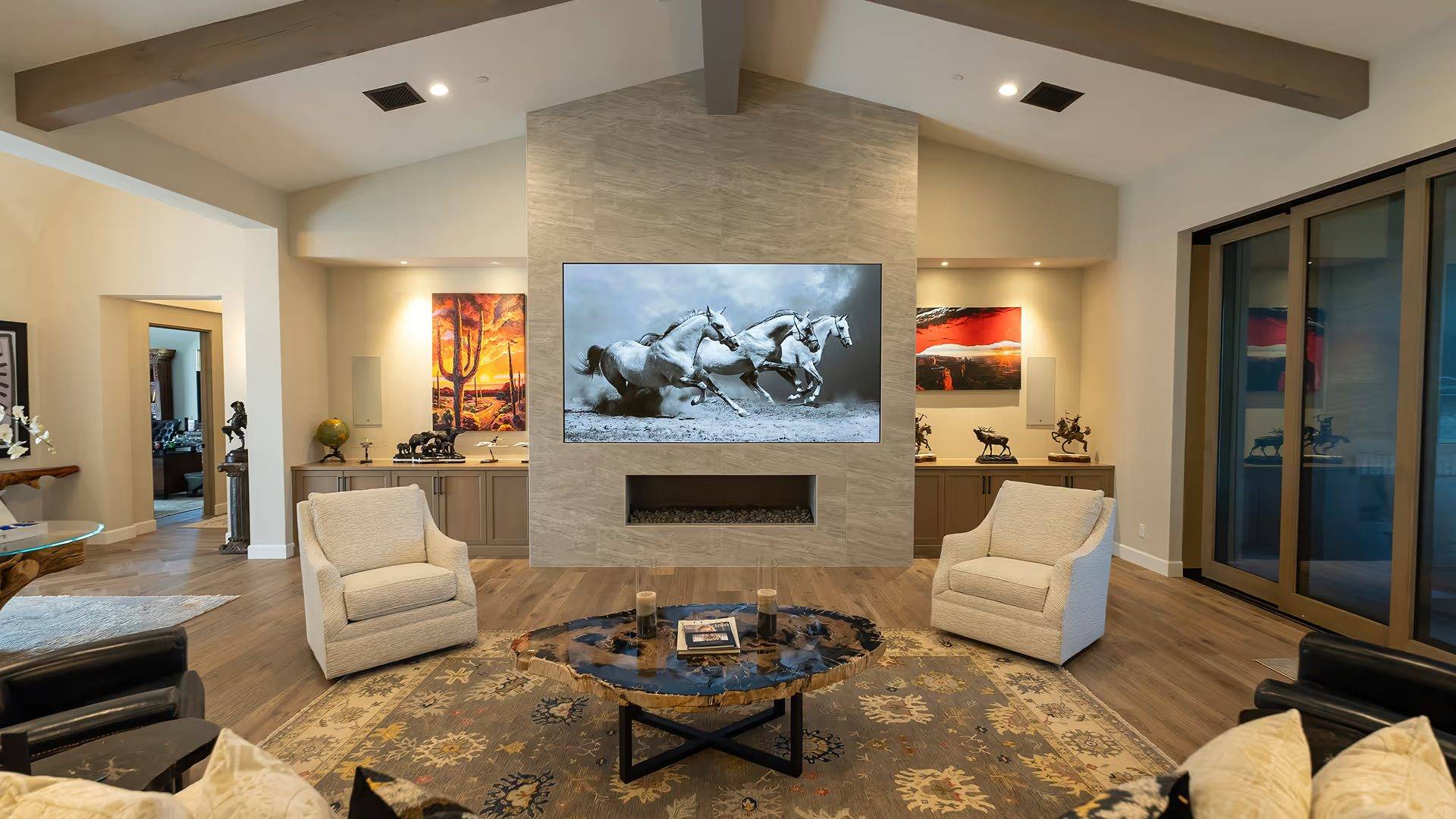
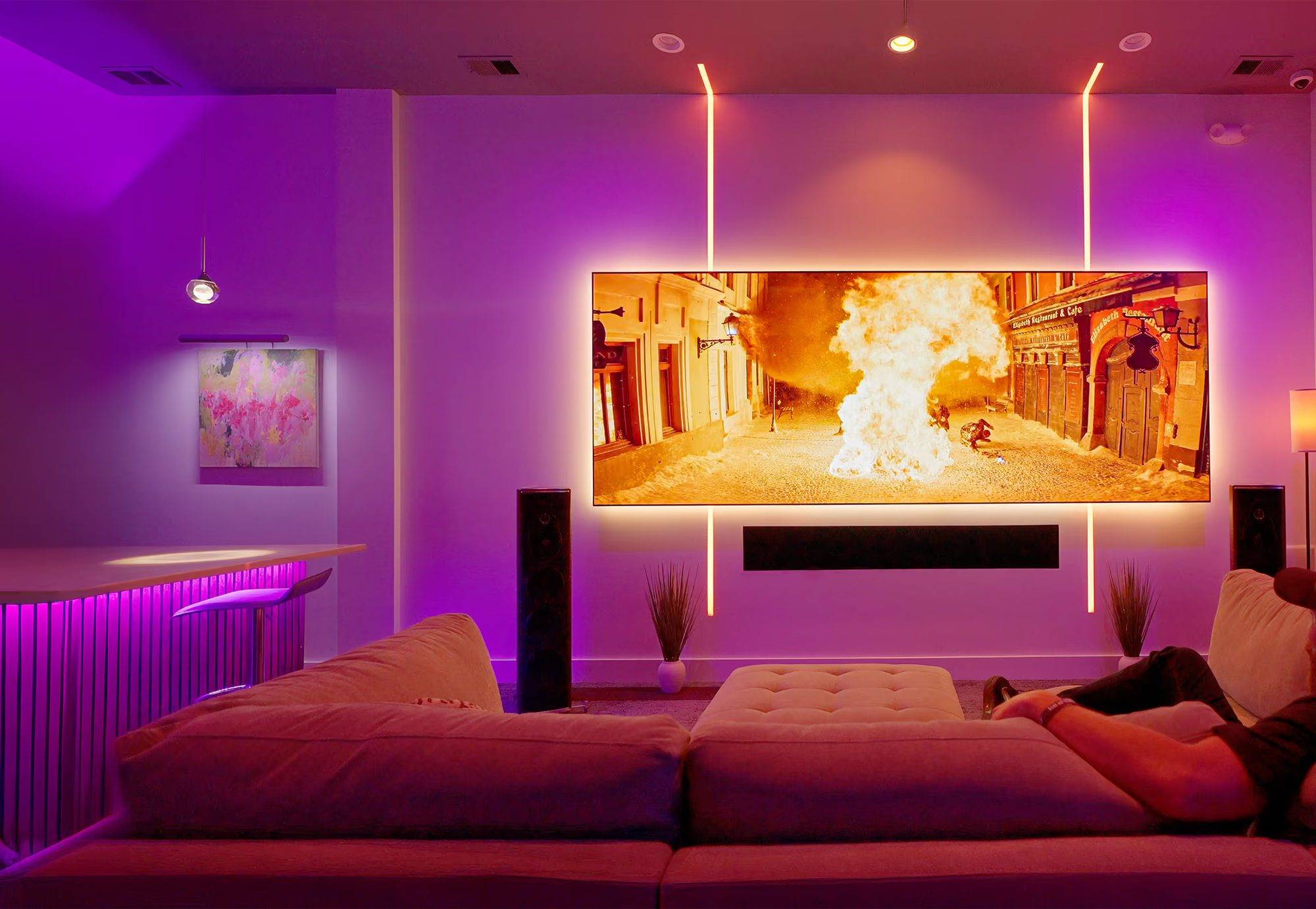
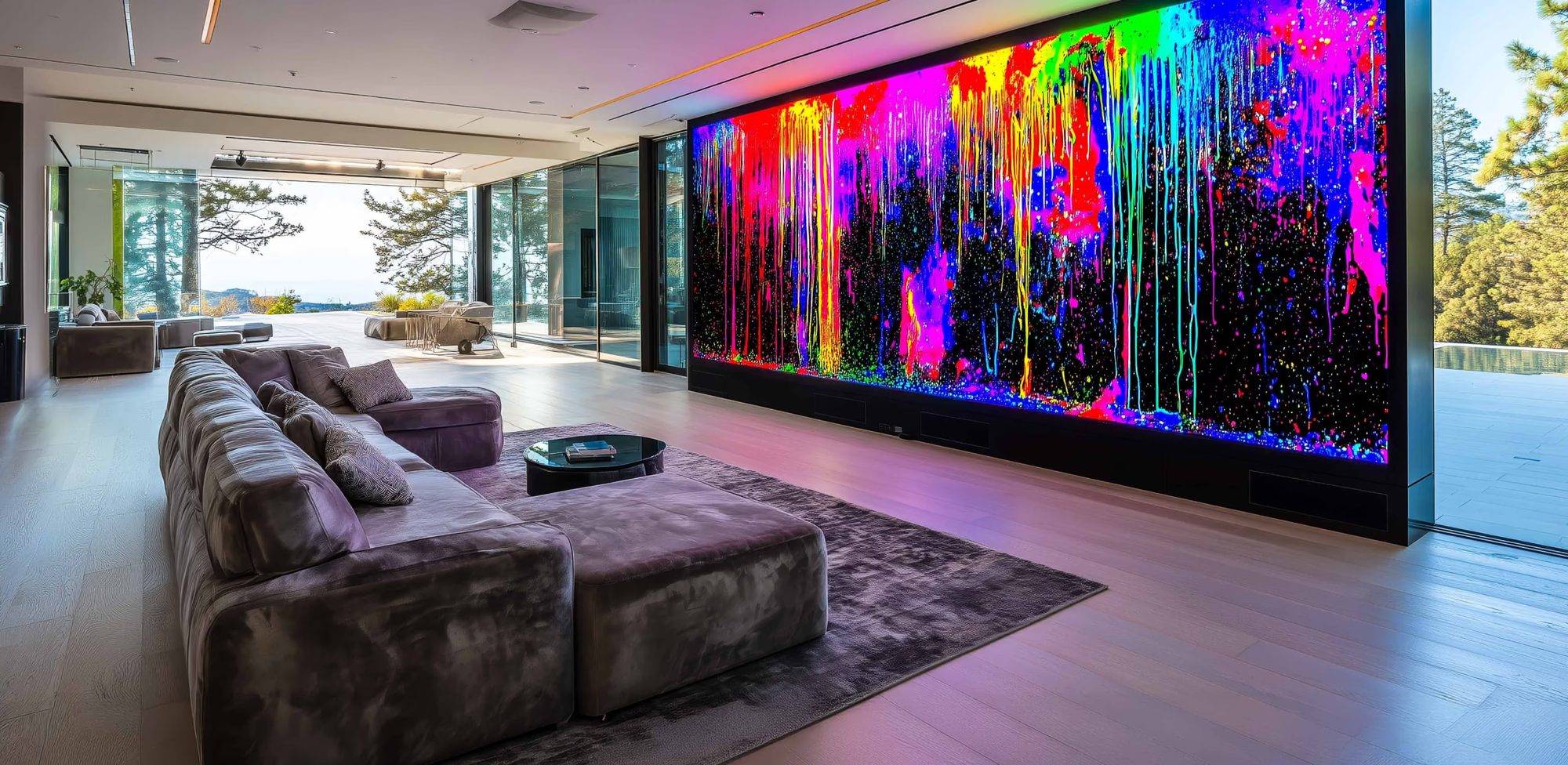
MicroLED video walls give a living room or theater an image larger than any television, with the brightness to hold up when the shades are open. We design them with Just Video Walls and Eleusis Digital Canvas.
The short answer
What is a home video wall?
A home video wall is a single large screen built from modular LED panels that light their own pixels, with no projector and no backlight. Fine pitch MicroLED walls can be built to almost any size, from about 100 inches to the full width of a room, and they are bright enough for rooms with windows. They show film, sport, gaming and art, and can blend into the wall when off.
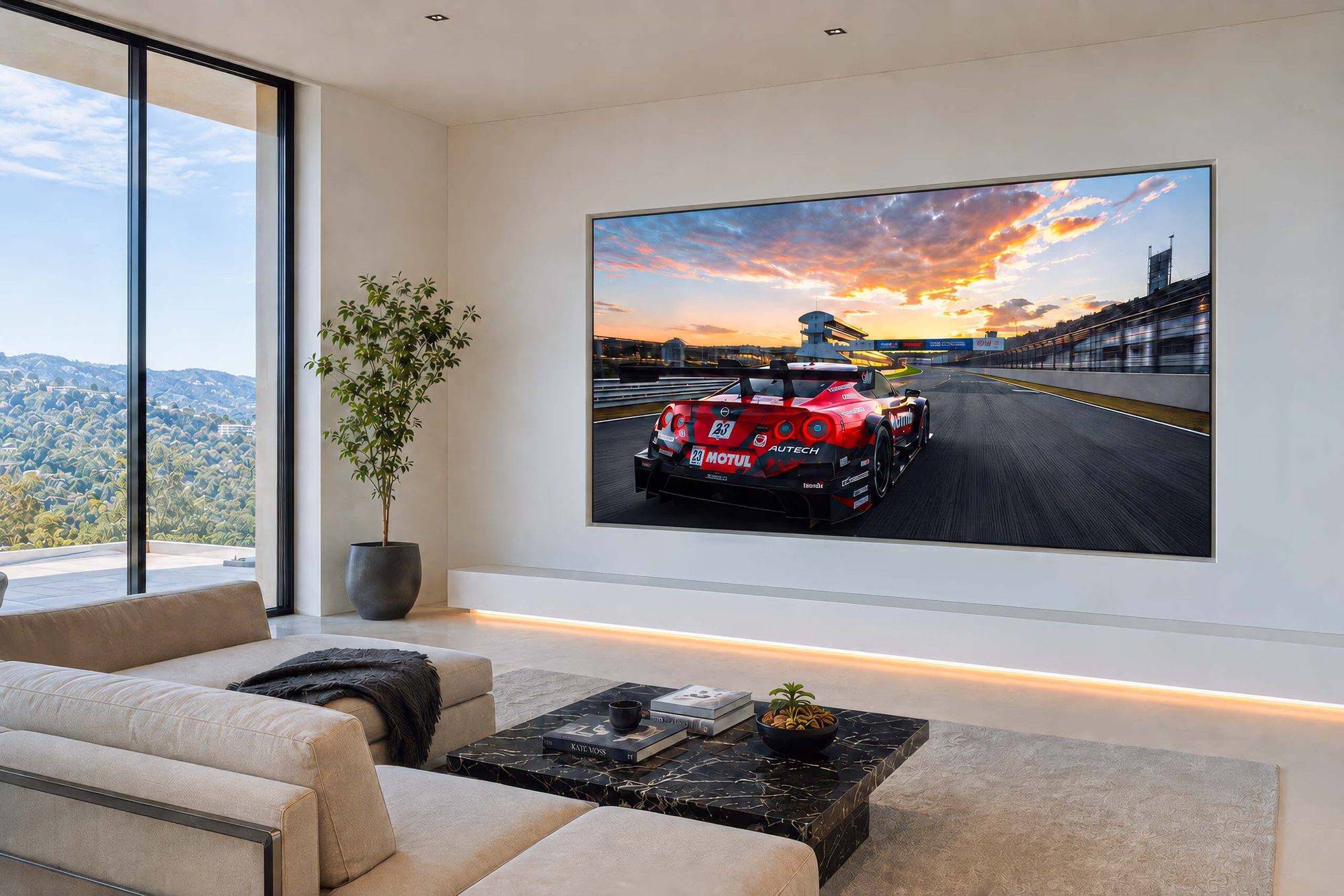
For most of the history of home cinema, a big picture meant a projector and a dark room. A video wall changes that. Each pixel is a tiny LED that makes its own light, so the image stays rich and saturated in a room full of daylight, and the screen can be as large as the wall allows. A family room, a lower level lounge or a dedicated theater can all have a picture that once belonged only to a commercial cinema.
The technology is mature enough now that the questions are about design, not whether it works. They include the pixel pitch that suits your seating distance, how the wall is supported, powered, cooled and serviced, where the speakers go (sound cannot pass through an LED panel) and what the wall looks like when it is off, which is most of the day. Those decisions shape the room, so we make them early, with your architect and builder at the table.
We design with two manufacturers. Just Video Walls, founded by integrators in Florida, builds MicroLED walls for indoor and outdoor rooms, from preconfigured systems to fully custom luxury builds. Eleusis Digital Canvas builds fine pitch direct view LED canvases designed to sit flush in the architecture and show fine art when they are not showing a film. Between them, we can fit a wall to almost any room in a New England home.
The brands we specify
Video Walls from the makers we trust
We are an authorized dealer for every manufacturer on this page.
Films from the makers
Video Walls on film
Films made by the manufacturers we install. Press play and they run right here on the page.
Just Video Walls | May 2025
Six creative uses of MicroLED in the home
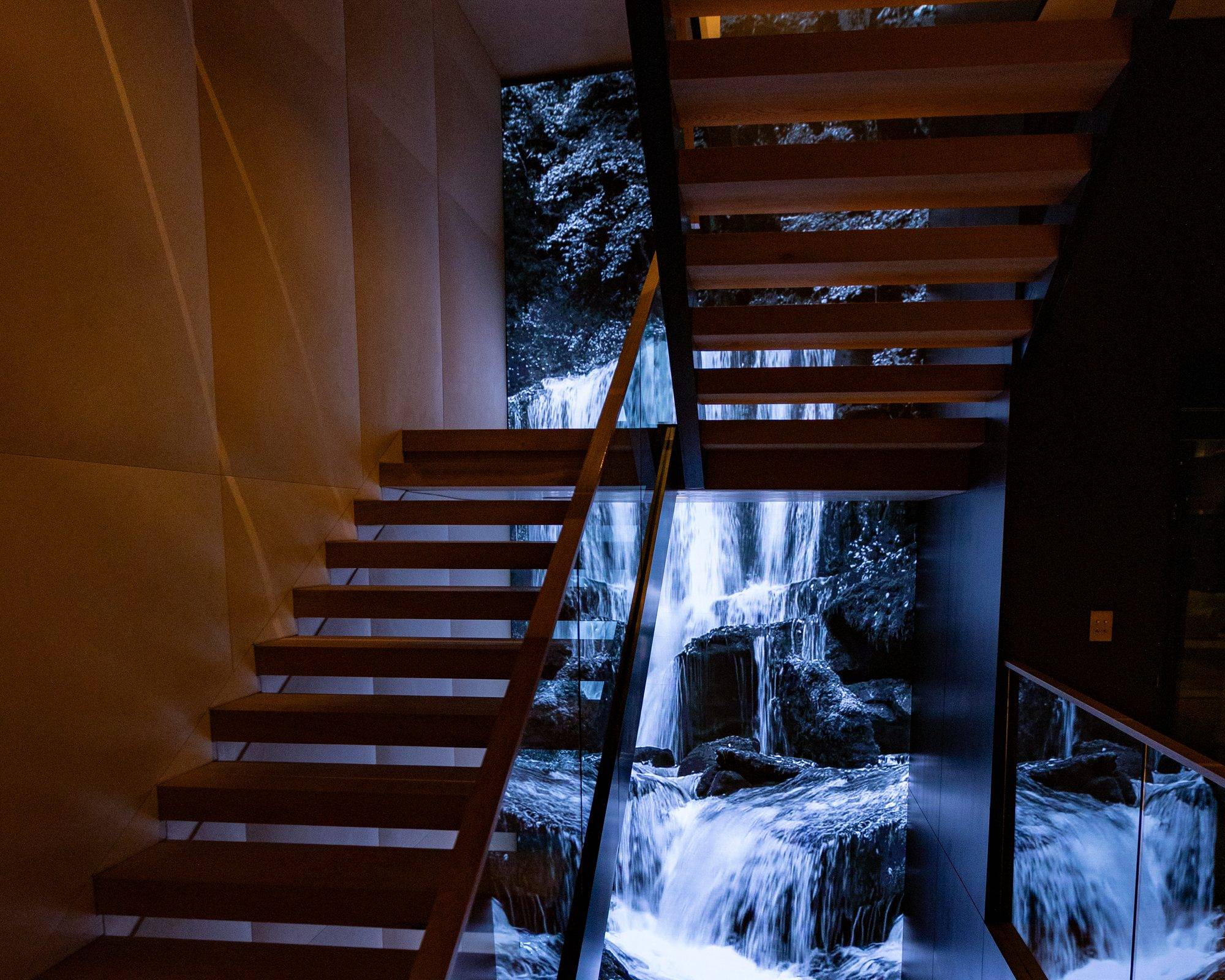
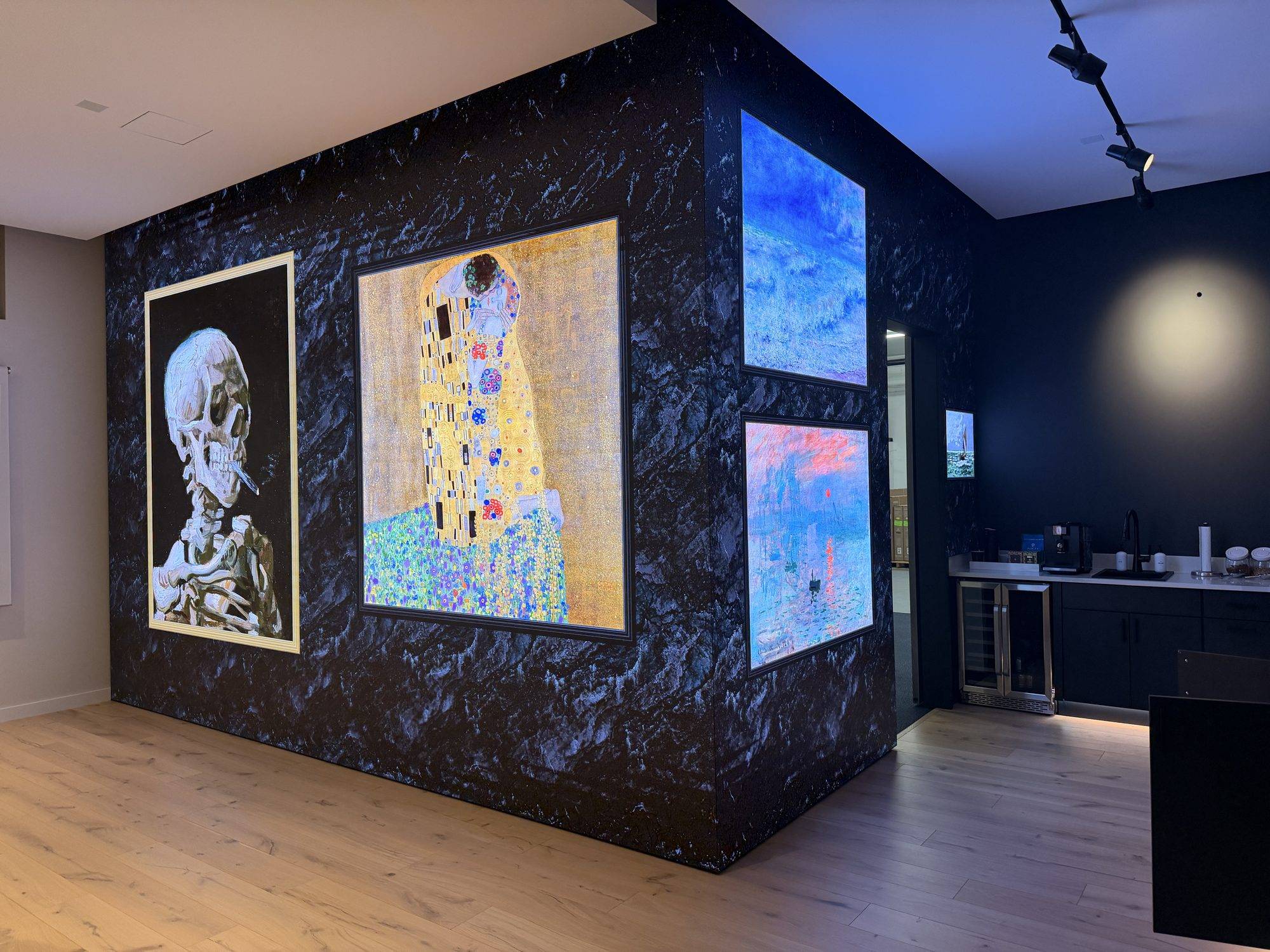
A walk through the Just Video Walls headquarters, with a digital canvas, a mirror wall, a touch wall and a camouflage wall that blends into the room.
Film by Just Video Walls. It plays here on the page.
MicroLED and direct view LED
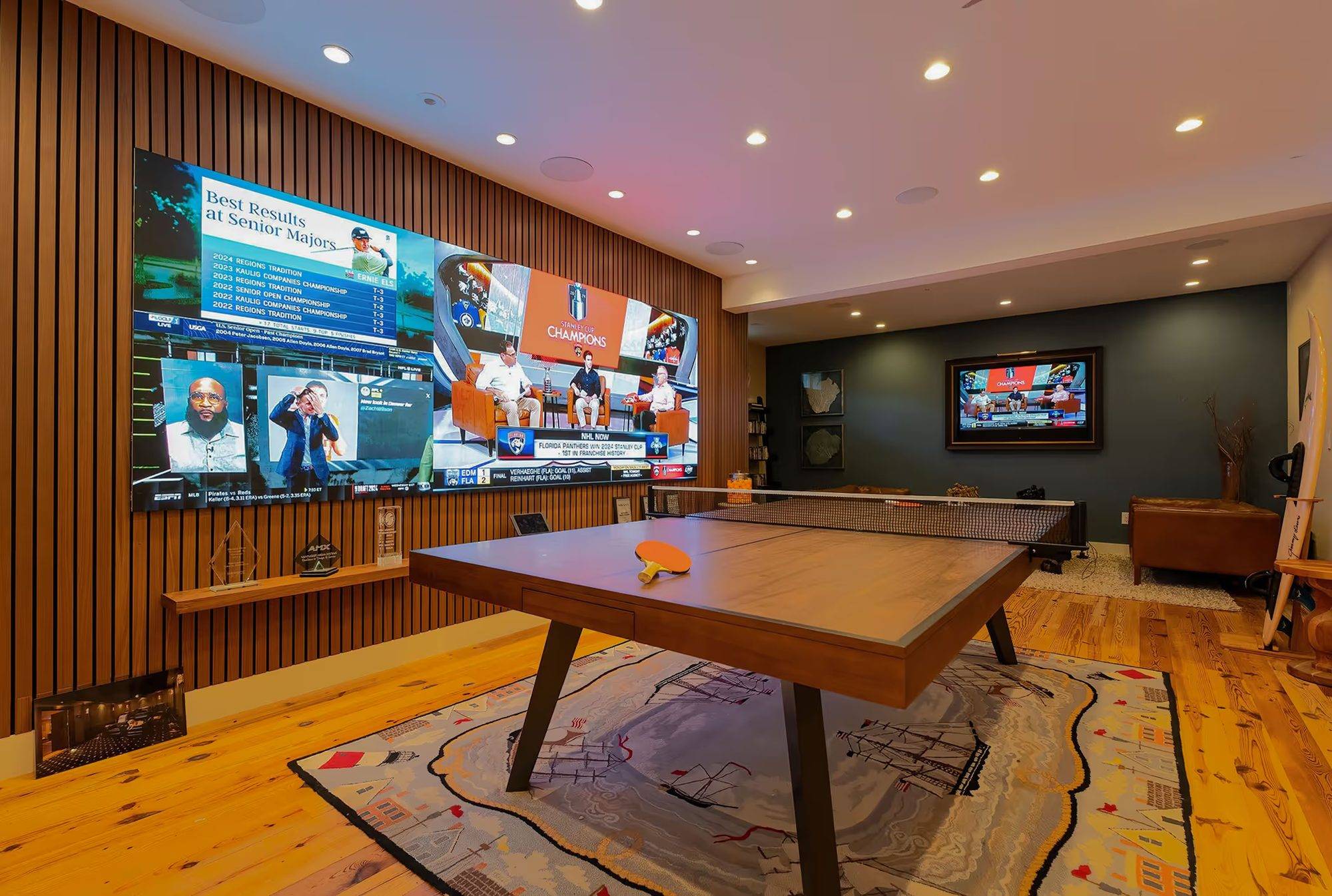
Direct view LED, often shortened to DVLED, is the family name for any screen made of LEDs you look at directly. MicroLED is the finest end of that family: very small LED chips at a very tight spacing, close enough that from a normal seat the wall reads as one continuous image rather than a grid of dots.
The two terms overlap in practice, and manufacturers use them differently. What matters for a home is the pixel pitch, the build quality of the panels, how evenly they are matched to each other, the surface finish, and the processor that turns your video signal into a picture across all of them. We judge walls on those things, not the label.
Pixel pitch and seating distance
Pixel pitch is the distance between the centers of neighboring pixels, measured in millimeters. A smaller pitch packs more pixels into each square foot, which means a sharper picture from close seats and a higher cost per square foot. A widely used rule of thumb puts the comfortable minimum distance in feet at about ten times the pitch in millimeters, so a 0.9mm wall looks smooth from about nine feet.
Pitch also fixes how big a 4K wall is. At roughly 0.9mm, 3840 by 2160 pixels make a wall of about 160 inches diagonal. At roughly 1.2mm, the same resolution spans about 210 inches. We choose pitch from your seating plan first, then size the wall, so the picture is sharp from the seats people actually use.
- 0.7mm: very close viewing, such as a gaming room or a smaller lounge
- 0.9mm: a typical family room or media room seating distance
- 1.2mm and up: large walls viewed from further back, and outdoor spaces
Brightness and HDR in living spaces
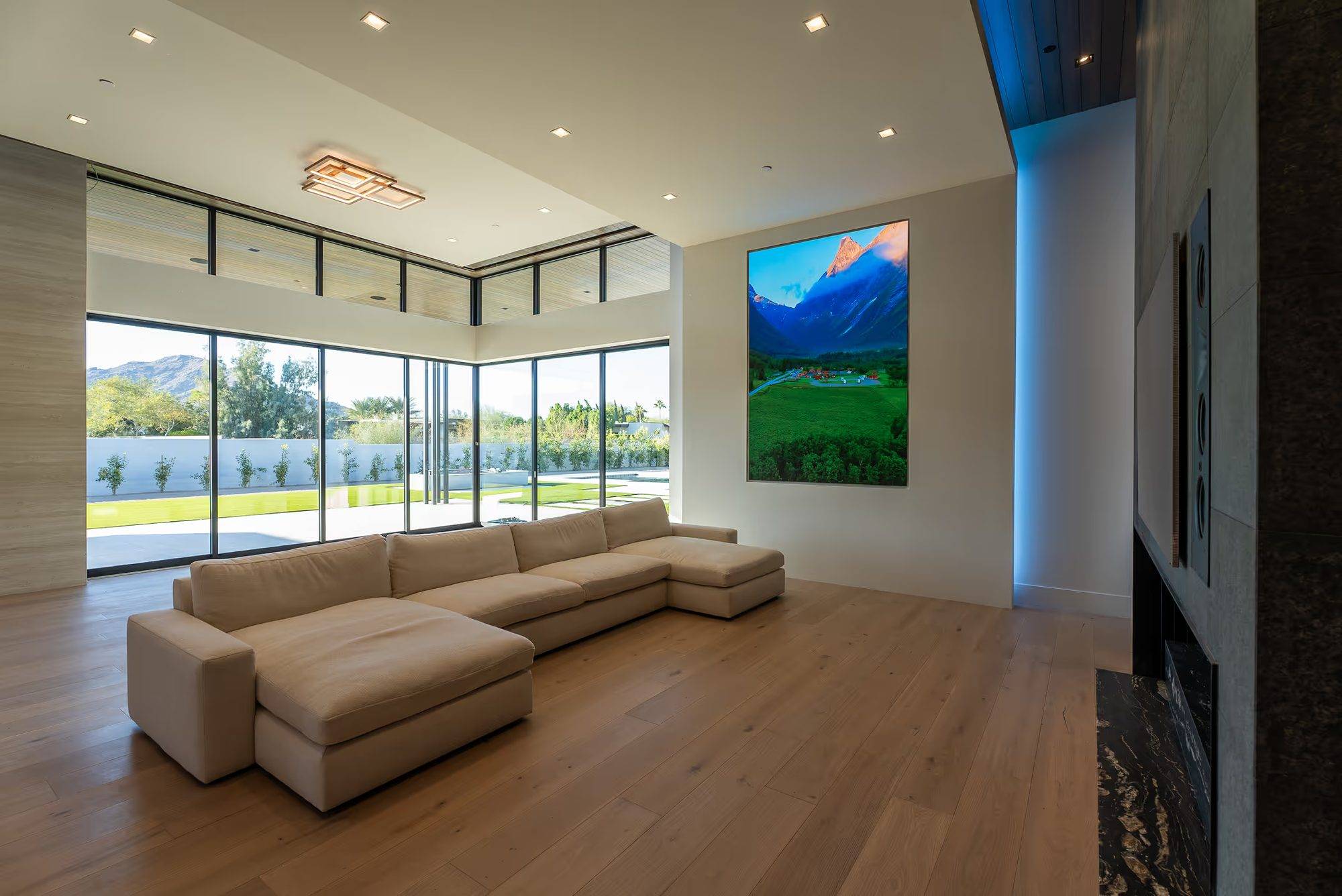
LED walls can be far brighter than a projected image, which is why they work in rooms with windows and glass doors. That headroom also lets HDR highlights shine: sunlight on water, stadium lights, a candle in a dark scene.
More brightness is not always better in the evening. A wall at full output can be tiring in a dim room. We calibrate a daytime mode and a night mode, and tie them to your lighting scenes so the wall settles down when the lights do.
Structure, power, heat and service access
A video wall is a piece of building, not a piece of furniture. The panels hang on a mounting structure that has to be flat and true across the whole wall, carried by framing or blocking that can take the load. Large walls usually need dedicated circuits, and every wall gives off heat that the room's HVAC has to remove.
Service matters too. Panels and modules are designed to be replaced, either from the front or from behind, and the choice affects how deep the wall cavity is and whether you need an access space. We draw all of this into the construction set so your builder frames for it once.
Sound with a video wall
Sound cannot pass through an LED wall the way it passes through an acoustically transparent projection screen. The front speakers have to sit around the image: in the wall beside it, above and below it, or in a purpose built bar along its edge.
Done well, the center channel still sounds anchored to the picture. We plan speaker positions with the wall dimensions, so the trim, the grilles and the screen read as one composition. Our home theater audio page covers the speakers we pair with these walls.
Art mode and when the wall is off
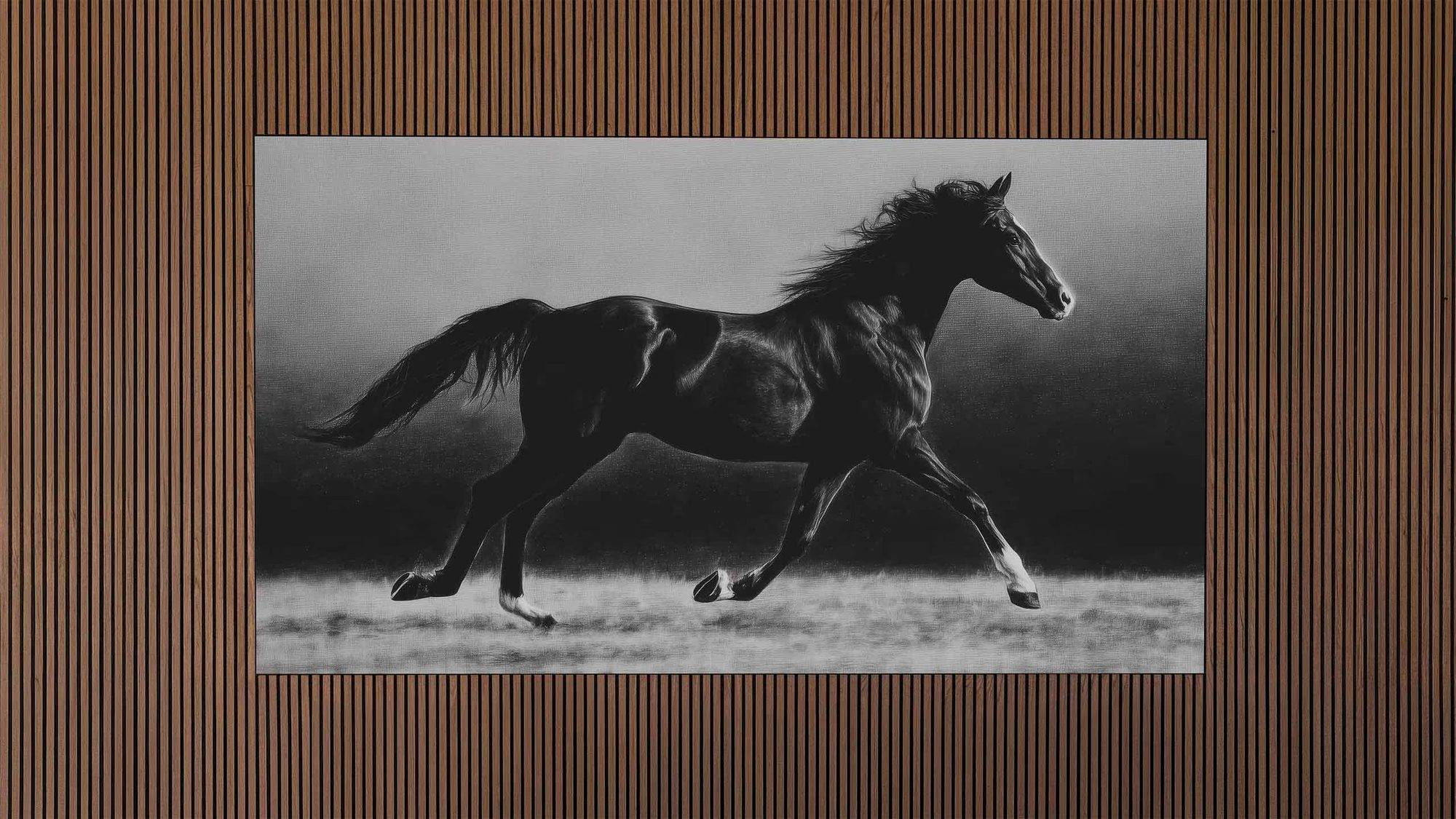
A large wall spends most of its life switched off, so its resting state is a design decision. Some owners want it to disappear. Others want it to show something: a painting, a slow moving digital work, a texture that matches the room.
Eleusis builds its canvases around this idea and includes a Blackdove digital art subscription. Just Video Walls offers a Camo mode in its Autograph line that lets the wall match its surroundings. We set brightness and schedules so art looks like art, not like a television left on.
Outdoor walls in New England weather
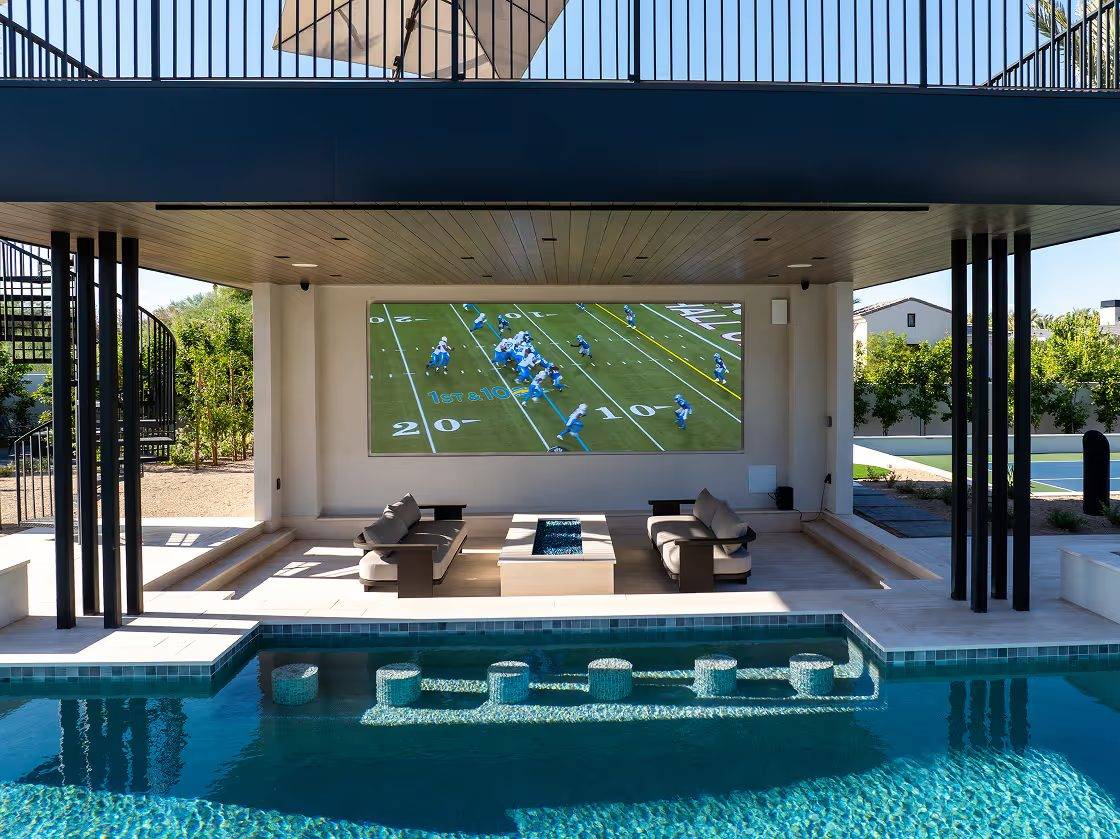
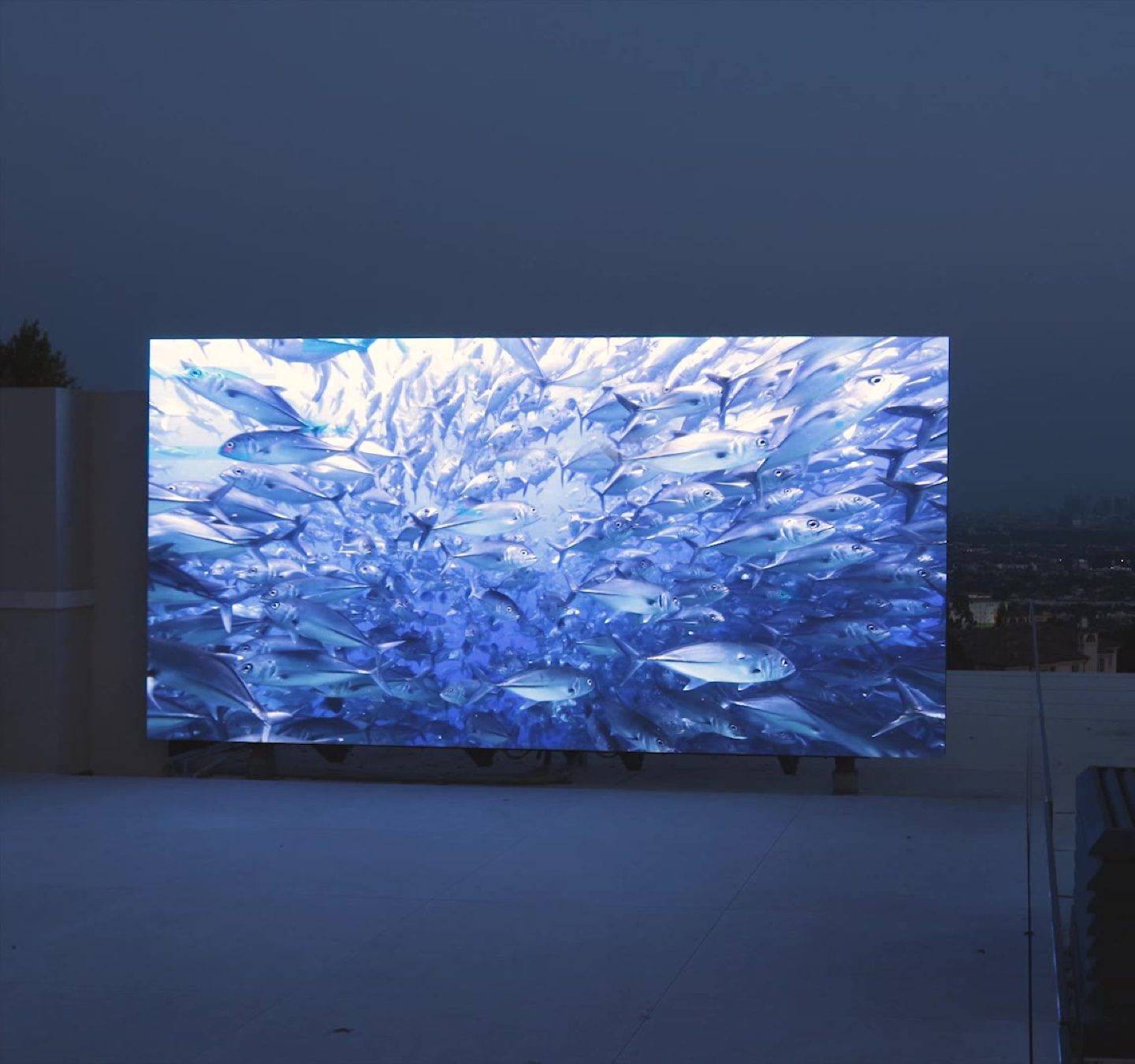
Outdoor LED walls are built for sun, rain and temperature swings, and both of our manufacturers make them. A pool terrace, a covered patio or a pavilion can carry a picture bright enough for an afternoon game.
New England asks more of an outdoor wall than a southern climate does. Salt air on the coast, freeze and thaw, snow load and a low winter sun all affect where the wall goes and how it is protected. We favor covered or partly covered locations, confirm ingress ratings and operating temperatures with the manufacturer, and plan what happens to the wall in January.
Video wall, projector or a 98 to 115 inch TV
| MicroLED video wall | Projector and screen | 98 to 115 inch TV | |
|---|---|---|---|
| Image size | About 100 inches to a full wall | About 120 to 200 inches | 98 to 115 inches |
| Daylight | Excellent | Needs a dark room or an ALR screen | Very good |
| Speakers behind the image | No | Yes, with an AT screen | No |
| Black level | Excellent, depends on panel and finish | Depends on the room | Excellent to very good |
| Look when off | Can show art or blend in | Screen can retract | A large dark panel |
| Construction | Structure, circuits, cooling, service access | Projector location, screen wall | Wall blocking and power |
| Relative cost | Highest | Moderate to high | Lowest of the three |
Featured products
Flagships we design rooms around
Guides
Video Walls questions, answered
Video Walls questions
How big can a home video wall be?
As big as the wall and the budget allow. Walls are built from panels, so size steps up in panel increments. Preconfigured systems from Just Video Walls have been offered from about 108 inches, and custom walls can run the full width of a room.
Can a video wall replace a projector in a dedicated theater?
Yes, and it brings more brightness and stronger HDR. The trade offs are cost and speaker placement, since the front speakers cannot sit behind the image. In a dark, dedicated cinema, projection still gives the largest picture for the money.
Do LED video walls need a lot of maintenance?
Very little day to day. Walls are designed so individual modules can be replaced if one fails, and we keep the replacement path open in the construction. We recommend holding spare modules from the same production batch so color matches.
Are video walls loud?
Panels and processors use cooling, and some designs use fans. In a quiet theater we check noise during design and place the processor and power supplies in an equipment room where possible.
Can a video wall be curved or an unusual shape?
Custom walls can be built in shapes other than a standard rectangle, including very wide formats and proportions chosen for art. The shape has to work with the panel size, the processor and the content you plan to show.
How long does it take to plan and install a video wall?
Design and structure planning happen during drawings. Lead time depends on the manufacturer and configuration. On site, the mounting structure, panels, calibration and control programming usually take days rather than weeks once the room is ready.
Can a video wall go in an older New England home?
Often, yes. Older homes need extra attention to wall flatness, framing strength, electrical capacity and heat. We survey the wall first, then design the support and power so the house carries the wall without surprises.
Keep exploring
A conversation about your theater
Tell us about the room, the way your family watches, and the feeling you want when the lights go down. We will bring CinemaTech's design team, our engineers and a plan.
Or call us at (781) 333-8003