Does a home theater add value to a luxury home?
By Adam Zell, Boston Automations | Published | Updated | 6 minute read
The short answer
Does a home theater increase home value?
Rarely dollar for dollar. Appraisers treat theaters inconsistently, and most value the finished square footage more than the equipment. In luxury homes, a well designed theater can help a house stand out and sell to the right buyer, but it is best built for your own enjoyment. Rooms that stay adaptable and do not cost a bedroom are the safest for resale.
The short answer
A home theater rarely returns its cost dollar for dollar at sale. That is true of most specialized rooms, from wine cellars to indoor pools. If you are building a theater only to raise the appraised value of your house, there are better places to spend the money.
That is not the whole story, though. In luxury homes around Boston and across New England, buyers expect real entertainment space, and a beautiful, well built theater can make a house more memorable and easier to sell to the right buyer. The value is real. It is just harder to measure than a kitchen.
How appraisers see a theater
Appraisers work from comparable sales, and there are few true comparables for a custom private cinema. Real estate professionals quoted in trade and consumer press describe inconsistent treatment: some appraisers count the finished square footage and little else, while others make an adjustment for a dedicated theater with features such as tiered seating.
In practice, that means:
- The finished space usually counts. A finished lower level adds living area whatever it is used for.
- The equipment usually does not count much. Electronics are seen as personal property that depreciates.
- Construction quality can count. Isolation, acoustic treatment and good finishes read as quality, even if they are not itemized.
We do not quote resale percentages, because we have not seen reliable data for luxury New England homes. For a specific property, ask a local agent or appraiser who knows your market.
How luxury buyers see it
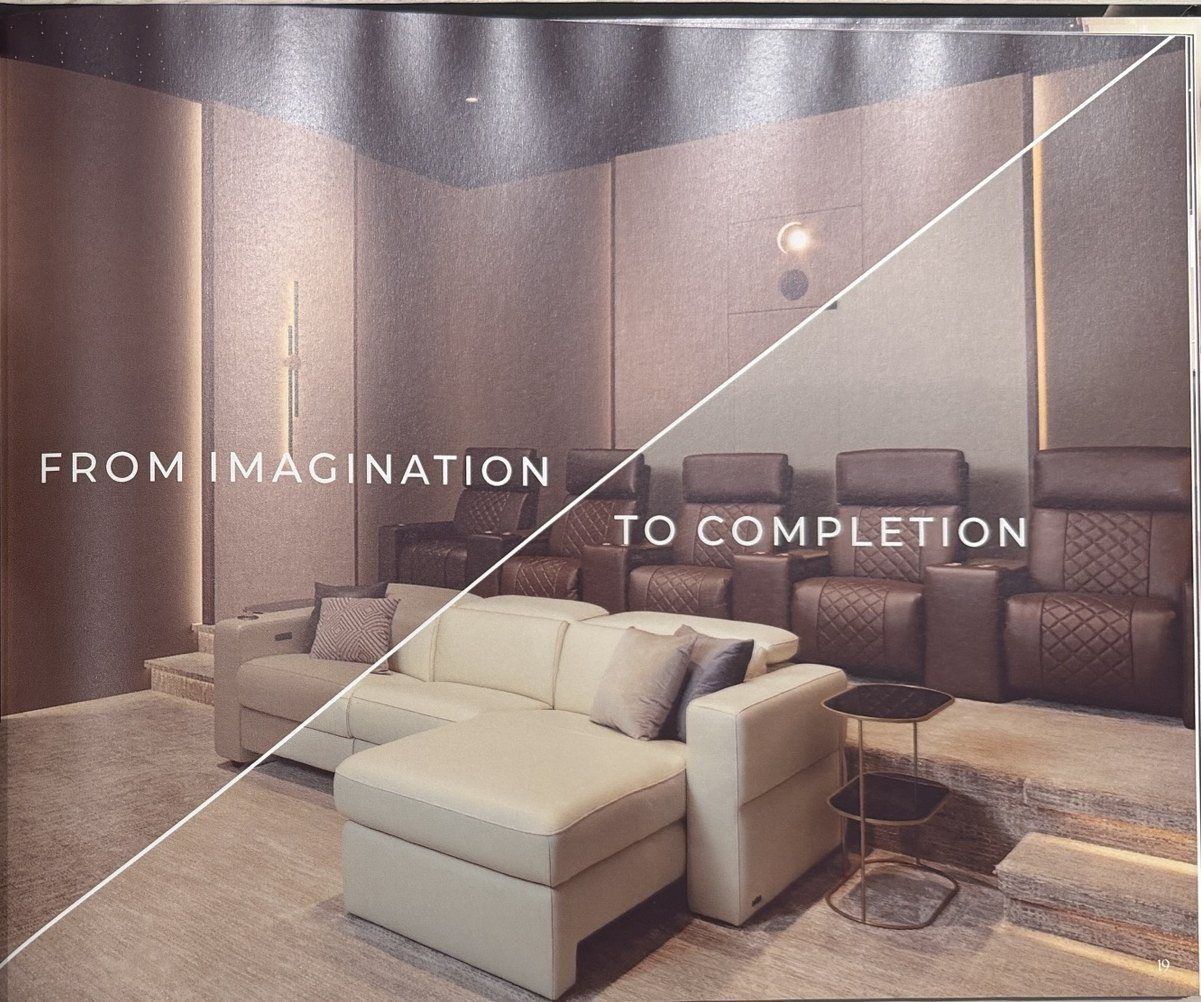
At the top of the market, buyers are not only comparing square footage. They are imagining their life in the house. A theater that looks like part of the architecture, with good seating, a starfield or paneled walls and a system that works with one button, helps them do that. Listing photographs of a beautiful cinema also stand out.
The flip side is that taste is personal. A themed room built around one family's favorite film, or a dated system that a buyer sees as a project, can work against the house.
Choices that help resale
| Choice | Why it helps |
|---|---|
| A dedicated space that does not cost a bedroom | Bedroom count drives value; a lower level theater keeps it intact |
| Timeless finishes | Fabric walls, wood and classic seating age better than a theme |
| Good construction | Isolation, quiet HVAC and acoustic treatment are hard to add later |
| Infrastructure for upgrades | Conduit and equipment space let a new owner update technology easily |
| Simple control | A buyer who can start a film in one press sees a working room, not a project |
| Drawings and documentation | A clear record of what was built and how it works reassures buyers and inspectors |
It also helps to think about how a future owner might use the room. A theater with general lighting on its own circuits, a display that can be used in the daytime, and seating that is comfortable for more than films can work as a family room, a screening room or a place to watch the game. Ask your architect to keep the door, ceiling height and ventilation suitable for ordinary living space, so the room is never a dead end in the floor plan. Flexibility costs little in the design stage and widens the pool of buyers who can picture themselves using it.
Choices that can hurt it
- Converting a bedroom. Turning an above grade bedroom into a theater reduces the bedroom count, which matters more to value and to the pool of buyers than almost anything else.
- Heavy theming. A room designed as a replica of one film or one era narrows its appeal.
- Over building for the street. A theater far beyond what comparable homes nearby offer is less likely to be recovered at sale.
- Unfinished business. Exposed wires, missing remotes or a system nobody can operate makes buyers discount the whole room.
What happens to the equipment
Electronics age faster than the room around them. The projector or display that is excellent today will be surpassed in a few years, while the room, the seating and the acoustics can last for decades. That is why we put so much weight on the parts of the theater that do not depreciate: proportions, isolation, treatment, seating and the infrastructure to upgrade.
When you sell, agree with your agent which equipment conveys with the house. Built in items are usually expected to stay. Removable electronics can be negotiated, and a buyer who loves the room often wants it complete.
Showing a theater when you sell
A theater only helps a sale if buyers experience it at its best. Before listing, have the system checked, update firmware, replace any worn remote and make sure a single press starts a film. Leave a short guide in the room for showings, and ask your agent to schedule time to demonstrate it rather than leaving buyers to fumble in the dark.
Photograph the room with the lights in a warm scene and an image on the screen. Keep the drawings, equipment list and warranty documents in one folder for the buyer. A theater that clearly works, and has a clear history, reads as an asset. One with a blank screen and a basket of remotes reads as a cost.
Why owners build a theater
The best reason to build a home theater is the time it gives your family: films on Friday nights, the Super Bowl with friends, the holidays when the house is full. For many owners, that is where the value lies, not in an appraisal.
If you also want to protect resale, the choices above are far easier to make early than to retrofit. Our cost guide explains what drives a theater budget, and our theater or media room guide can help decide which room suits your house. When you are ready, start a conversation.
More questions
Should I leave the theater equipment when I sell?
Decide with your agent and put it in writing. Built in speakers, screens and acoustic treatment are usually treated as part of the house, while projectors, processors and movie servers can be included or excluded. A buyer who loves the room often wants it complete.
Is a media room safer for resale than a dedicated theater?
Often, because a media room reads as flexible living space to more buyers. A dedicated theater appeals strongly to fewer buyers. In luxury homes, where buyers expect entertainment spaces, a well designed theater is more likely to be seen as a feature.
