How many subwoofers does a home theater need?
By Adam Zell, Boston Automations | Published | Updated | 7 minute read
The short answer
How many subwoofers should a home theater have?
Plan on at least two subwoofers for a dedicated theater, and four for rooms with two or more rows. One subwoofer can sound strong in one seat and weak in the next, because bass waves build up and cancel around the room. Several subwoofers in planned positions, integrated with room correction, give even bass in every seat and more headroom.
Why one subwoofer is rarely enough
Bass waves are long. At 40 Hz a single wave is about 28 feet from peak to peak, longer than most theaters. As those waves bounce between the walls, floor and ceiling, they pile up in some places and cancel in others. These are called room modes, and they are why bass sounds huge in one seat and thin two seats over.
A single subwoofer excites those modes in one particular way, and no amount of equalization can fix a cancellation that happens in one seat and not the next. Several subwoofers in different places excite the modes differently. Combined, their peaks and dips partly cancel each other out, and the bass becomes much more even across the seating area.
How many for your room
These are starting points we use, before modeling and measurement refine them:
| Room | Typical subwoofers | Why |
|---|---|---|
| Media room, one sofa | One or two | Two give smoother bass across a wide sofa |
| Dedicated theater, one row | Two | Even bass across four or five seats |
| Dedicated theater, two rows | Two to four | Rows sit in different parts of the room modes |
| Large cinema, three rows or more | Four or more | Coverage and output for a large room |
The count follows the seating plan. A room with one row in the sweet spot can do well with two. A room where the back row sits near the rear wall, a natural bass build up area, usually needs four to bring the rows into balance.
More subwoofers or bigger ones?
For evenness, more is better than bigger. Two medium subwoofers in good positions will usually give more consistent bass than one very large one. Bigger subwoofers win on how deep and loud each one can play.
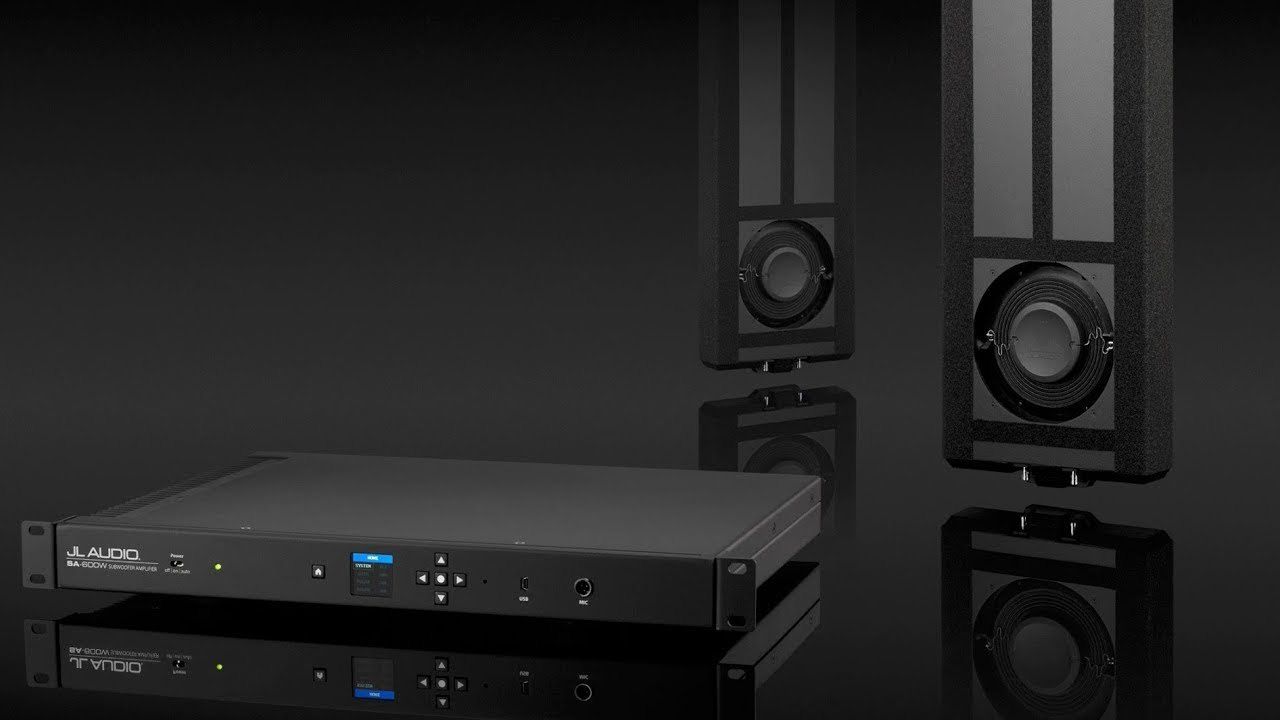
In practice the answer is often both. A medium dedicated theater might use two to four JL Audio Fathom f113v2 subwoofers, each with a 13.5 inch driver. A large room might use JL's dual driver Gotham g213v2 or Wisdom's STS, which pairs two 15 inch woofers and is rated to 130 dB at 20 Hz. A media room might use a pair of 12 inch Fathoms or an in-wall system.
Sealed or ported?
A sealed subwoofer has a closed box. Its output rolls off gently below its lowest note, and it tends to sound tight and quick. A ported subwoofer adds a tuned opening that reinforces output near its tuning frequency, so it can play louder in that range from a similar driver, but its output falls away more steeply below it. The Fathom and Gotham models named above are sealed designs, while the James PowerPipe X uses a port.
In a dedicated theater with several subwoofers, sealed designs blend easily and the room itself adds bass at the lowest frequencies. Ported designs earn their place where one or two units must move a lot of air. Mixing types in one system is possible but makes integration harder, which is another reason to keep subwoofers matched.
Headroom and distortion
Multiple subwoofers also share the work. Each one plays a little quieter for the same total output, so its driver moves less and its amplifier stays further from its limit. That lowers distortion and keeps big effects clean instead of strained.
Film soundtracks put a lot of energy into the deepest bass. Explosions, engines and scores can push a single subwoofer hard. Spread across four, the same scene stays effortless.
Why matched subwoofers matter
When subwoofers are identical, they respond to the same signal in the same way, which makes them easy to combine. The processor can treat them as one large bass system, and room correction tools such as Dirac Bass Control can adjust each one's level, delay and filters to make the combination as even as possible. Our Dirac room correction guide explains how.
Subwoofers in media rooms
Media rooms and family rooms have their own challenges. They are often open to a kitchen or hallway, which lets bass escape and changes the room modes. The seating is usually a wide sofa or a sectional rather than rows, so the bass has to be even side to side. And nobody wants two large black boxes in a living space.
Two subwoofers still help here, often more than in a closed theater. A pair of compact sealed models, such as the JL Audio Fathom f112v2, can sit inside cabinetry with fronts designed to pass bass. In new construction or a renovation, in-wall subwoofers keep the floor clear. The goal is the same as in a theater: bass that is even across the seats, with enough headroom that films never sound strained.
Open plans do reduce the level you can reach and spread bass into the rest of the house. We set expectations honestly, choose positions with the whole floor plan in mind, and set maximum volume limits if the family wants them.
Hiding several subwoofers
Four subwoofers sound wonderful and look like a lot of boxes. In a dedicated theater they disappear behind the screen, inside the riser, or behind acoustic fabric in the side walls. In living spaces, in-wall systems such as the JL Fathom IWSv2-SYS-213 fit between studs, and James PowerPipe X subwoofers hide in a ceiling or cabinet and vent through a small grille.
How we decide
We model the room from the drawings, test subwoofer positions against the seating layout, and choose the number and size of subwoofers that gives even bass in every seat at the level you want. Then we measure in the finished room and adjust. The next step is placement and blending, which our subwoofer placement guide covers.
The decision also shapes construction. Every subwoofer needs a location, power, a signal run and in many cases framing or a cabinet built around it, so the count needs to be settled before walls close. Adding a subwoofer after the fabric walls are installed is possible but disruptive. We would rather plan for four and start with two than discover later that the back row needs help and there is nowhere to put it. Spare signal and power runs to likely positions are inexpensive insurance.
More questions
Can we mix two different subwoofer models?
It can work with careful calibration, but matched subwoofers are simpler and more predictable because they share the work equally and respond the same way. When a room needs both freestanding and in-wall subwoofers, we integrate them with the processor's bass management and room correction.
Does a small room need two subwoofers?
Small rooms often have the most uneven bass, because room modes are spread further apart in frequency. Two subwoofers usually help even in a compact media room, especially if people sit on a wide sofa or in two rows.
What does the .1 or .2 in 7.2.4 mean?
The middle number is the count of subwoofers in the layout. A 7.2.4 system has two subwoofers, and a 9.4.6 has four. The soundtrack itself carries one low frequency effects channel, which the processor sends to all of them.
