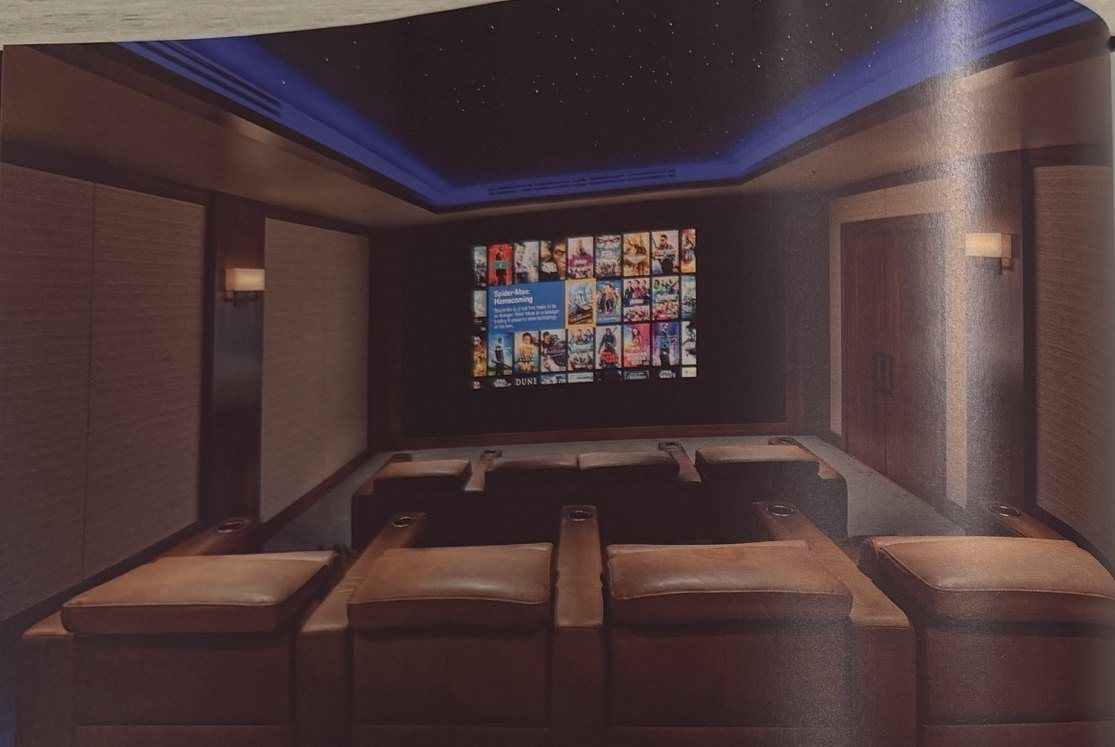
What a reference home theater actually means
By Adam Zell, Boston Automations | Published | Updated | 7 minute read
The short answer
What is a reference home theater?
A reference home theater is a room designed and measured to reproduce films the way the filmmakers heard and saw them on the mixing stage and grading suite. That means accurate color and brightness, enough sound output and headroom for full scale peaks, even bass at every seat, controlled acoustics and a quiet room, all verified by measurement rather than by ear alone.
What reference means
Every film is finished in two kinds of rooms. The sound is mixed on a dubbing stage, a carefully measured room where the mixers hear exactly what they are creating. The picture is graded in a color suite on a calibrated mastering display. Those rooms are the reference: the closest thing to what the filmmakers intended.
A reference home theater tries to reproduce those conditions at home. It is not a brand, a price point or a list of equipment. It is a standard of accuracy, and it can be measured.
The CEDIA RP22 levels
For years, "reference" was used loosely. In 2023, CEDIA and the Consumer Technology Association published RP22, a recommended practice for immersive audio design in private entertainment spaces. It defines four performance levels and a set of measurable parameters a designer can plan for and verify.
| Level | Broadly describes |
|---|---|
| Level 1 | Conveys the basic intent of the content creator |
| Level 2 | Conveys that intent more accurately |
| Level 3 | Performance in line with reference commercial cinema |
| Level 4 | The highest performance across every parameter |
The useful thing about RP22 is that it turns a vague word into a target. Before design begins, we can agree with a client which level each parameter should reach, and design the speakers, subwoofers, acoustics and isolation to get there.
Reference sound
Film sound is mixed against a calibrated level. In cinema practice, each main channel is set so a test signal at 20 dB below digital full scale measures 85 dB at the listening position, which leaves room for peaks of about 105 dB per channel, with more for the low frequency effects channel. That is the source of the term "reference level".
You do not need to listen there. What matters is that the system can reach it cleanly. A reference system has:
- Speakers and amplifiers with enough output and headroom to play peaks without strain or distortion
- Even bass across every seat, usually from several subwoofers placed and tuned together
- A center channel that keeps dialogue clear at every seat
- Surround and height speakers placed to the layout's guidelines for the seating
- A low noise floor, so quiet scenes are truly quiet
Our home theater audio page covers the loudspeakers and processors we design with, and our Dolby Atmos layout guide explains placement.
Reference picture
On the picture side, reference means the image matches the standards films are mastered to: the D65 white point, the correct color gamut for the content, accurate brightness and gamma for standard dynamic range, and correct tone mapping for HDR. It also means an image size and seating distance that fill your view the way the filmmaker expected, and a source with enough quality to show it.
That source matters. Films downloaded at high bit rates or played from 4K discs hold more detail and fewer compression artifacts than most streaming. See our Kaleidescape and madVR page for reference playback and video processing.
Screen size and seating
Accuracy also depends on geometry. If the screen is too small for the seats, the image loses the scale the director composed for. If it is too large, viewers turn their heads to follow the action and lose the edges of the frame. The right size comes from the seating distance, the aspect ratio of the screen and the height of the room.
Sound has a geometry too. Speakers are placed at angles relative to the main seats, and the layout guidelines from Dolby and other format owners describe those angles. A reference room is drawn so that the screen, the speakers and the prime seats all line up, and the riser is tall enough that every row sees the full image. Our room size guide covers seating distance and riser height.
Acoustics, isolation and the room
The most expensive speakers in an untreated, noisy room will not sound like reference. The room shapes everything you hear and much of what you see:
- Acoustics. Absorption and diffusion control reflections so dialogue is clear and effects are precise. See acoustics.
- Isolation. Keeps outside noise out and theater sound in, which lowers the noise floor.
- Quiet HVAC. Air must move slowly and quietly, or it masks quiet passages.
- Light control. Dark, non reflective surfaces near the screen protect contrast.
Measurement and verification
The final step is verification. The system is measured at the seats with calibrated microphones and a light meter, then adjusted. Speaker levels, distances, bass response and equalization are set for the room, and the display is calibrated for each type of content. Our calibration guide explains how that works.
Ask for the results in writing. A useful report shows the target for each parameter, such as background noise, maximum output and how evenly bass reaches each seat, next to what was measured in the finished room. It turns "reference" from a claim into a record, and it gives a baseline to measure against after future changes to equipment or the room.
Is reference right for you?
A reference theater is for people who care about how films were meant to look and sound and want a room that will not need to be rebuilt as their taste grows. It asks more of the room: dedicated space, isolation, treatment and careful mechanical design. For a family media room used mostly for sports and television, a high performance room below reference may be the wiser choice.
Either way, we can tell you early which level your space can support. Start with a conversation about the room and how you watch.
More questions
Does a reference theater have to be played loud?
No. Reference describes what the system can do accurately, not how loud you choose to listen. Most people watch below reference level. A system with headroom simply sounds cleaner and more effortless at any volume.
Is a reference theater only for projectors?
No. The standard is about accuracy, not technology. A large TV or a direct view LED wall can be part of a reference room if it is calibrated and matched to the seating distance and room.
